Nice, France Travel Guide: Using Nice as a Base for the French Riviera
There are cities you “do,” and then there are cities you settle into.
For me, Nice was never meant to be a checklist destination. It was designed as a base, a place to return to after chasing light and wandering neighboring towns, where daily life could unfold in between train rides and market mornings.
When planning a South of France itinerary, you might be tempted to treat Nice as a quick stop before moving on to glamorous names like Cannes, Antibes, or Saint-Tropez. I’d argue that you shouldn’t. Nice may be the smartest base on the Côte d’Azur, especially if you want to balance classic Riviera sights, day trips by train, local markets, beach time, and photography.
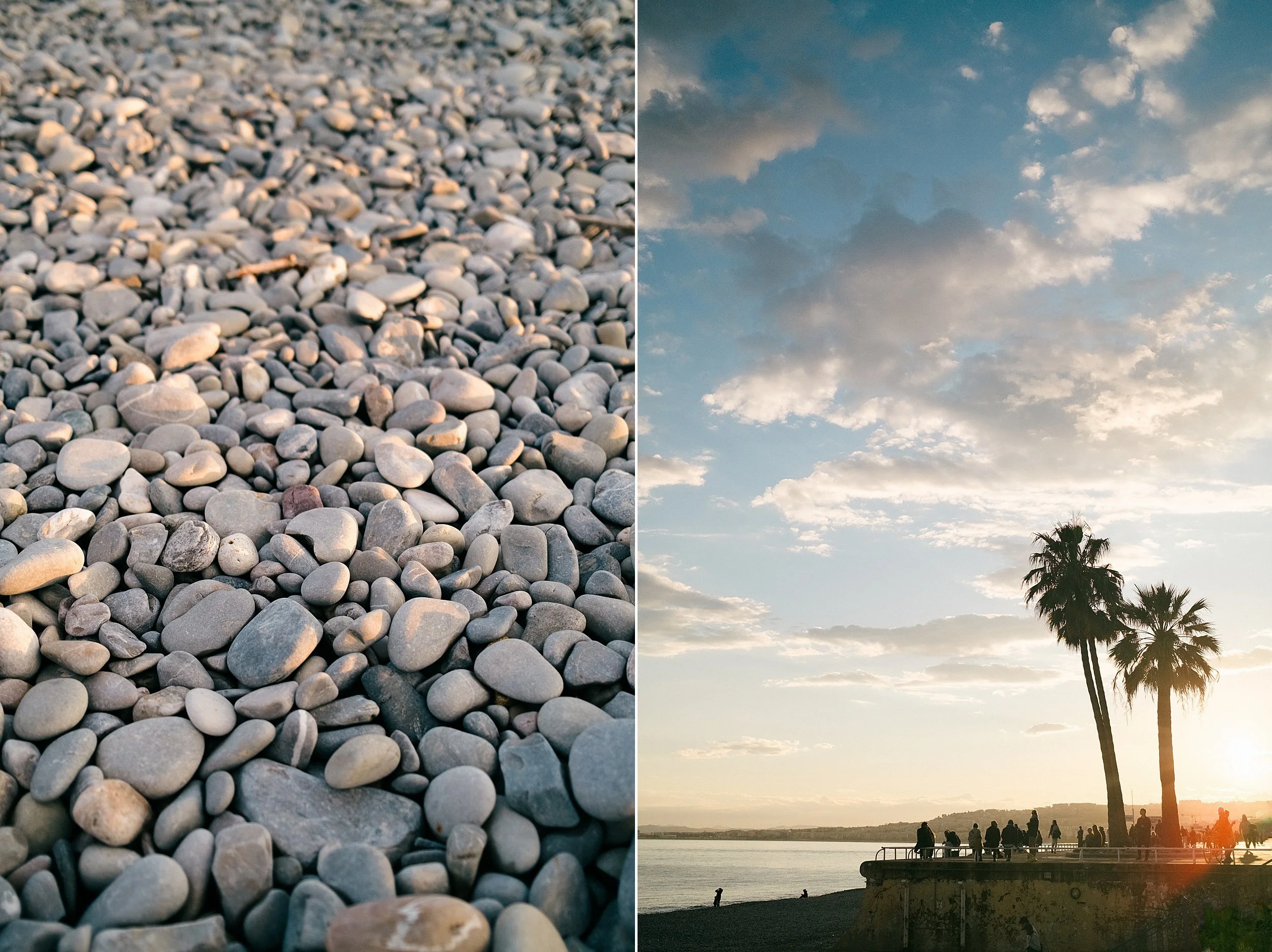
That was exactly our strategy.
Rather than rushing through the French Riviera in a blur of hotel changes, we rented an apartment at 8 Boulevard Jean Jaurès via AirBnB, right on the edge of Old Town, and used Nice as our home base for nearly a week. It gave us easy access to trains, trams, neighborhood food shopping, and some of the most photogenic streets in southern France. More importantly, it let us experience Nice as a city, not just as a checklist of viewpoints.
For anyone researching where to stay in Nice, whether Nice is worth visiting, or how to structure a French Riviera itinerary without a car, this approach worked incredibly well. I particularly appreciated how it allowed us a lot of flexibility to change our plans around the weather forecast. We had some dreary days and a bit of rain, which is typical of March.
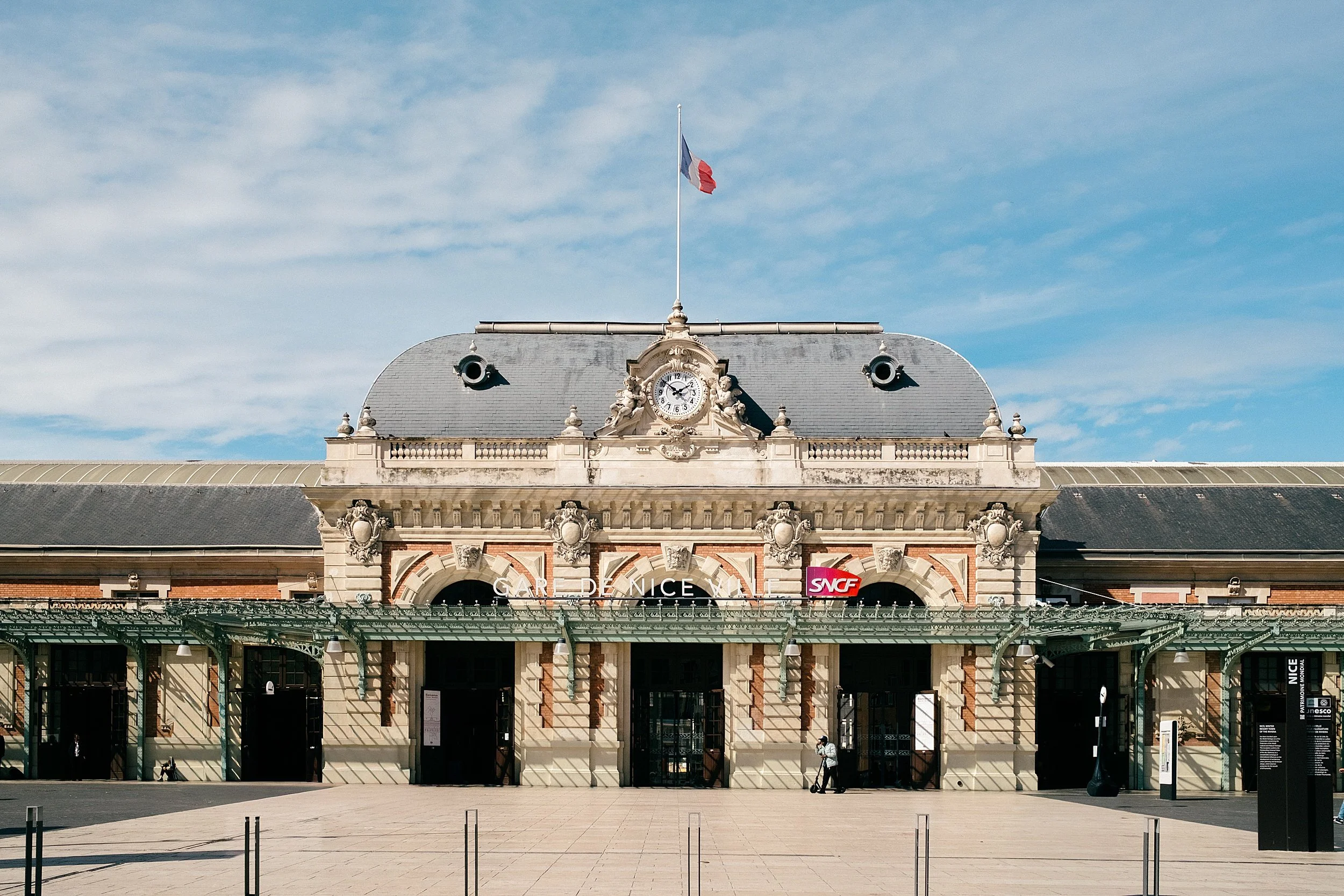
Why Nice Makes an Ideal Base for a South of France Trip
There are practical reasons Nice works so well.
The city has the Riviera’s best transportation hub, with frequent TER trains linking you to Villefranche-sur-Mer, Antibes, Menton, Monaco, and even Italy. The tram system makes moving around town simple. And unlike smaller postcard-perfect villages, Nice has real neighborhood infrastructure: markets, bakeries, grocery stores, cafés, pharmacies, laundromats.
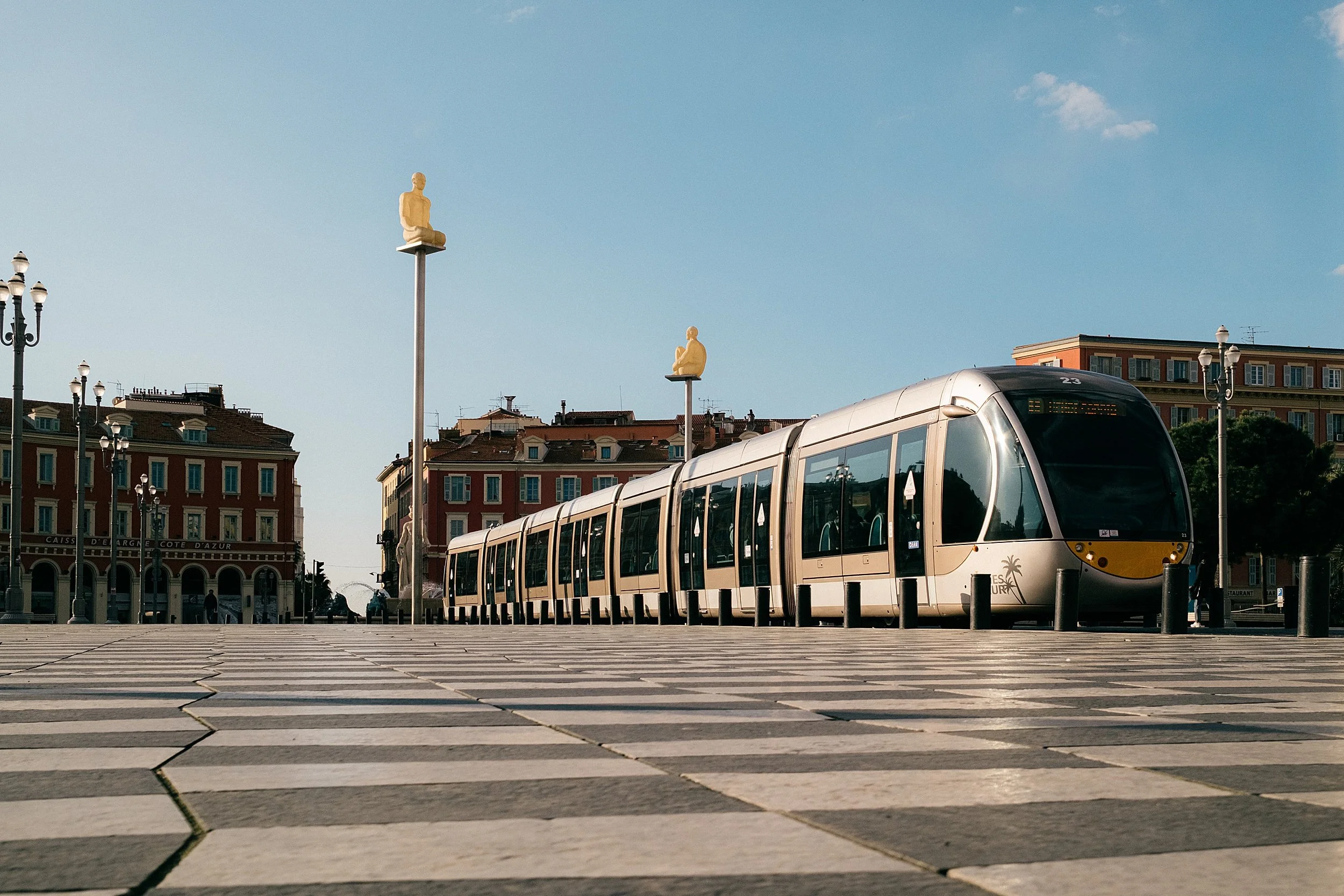
That may not sound romantic, but on a multi-stop France trip, those details matter.
Our AirBnB at 8 Jean Jaurès was a highly strategic choice on the edge of the old town that put us walking distance from:
Promenade des Anglais
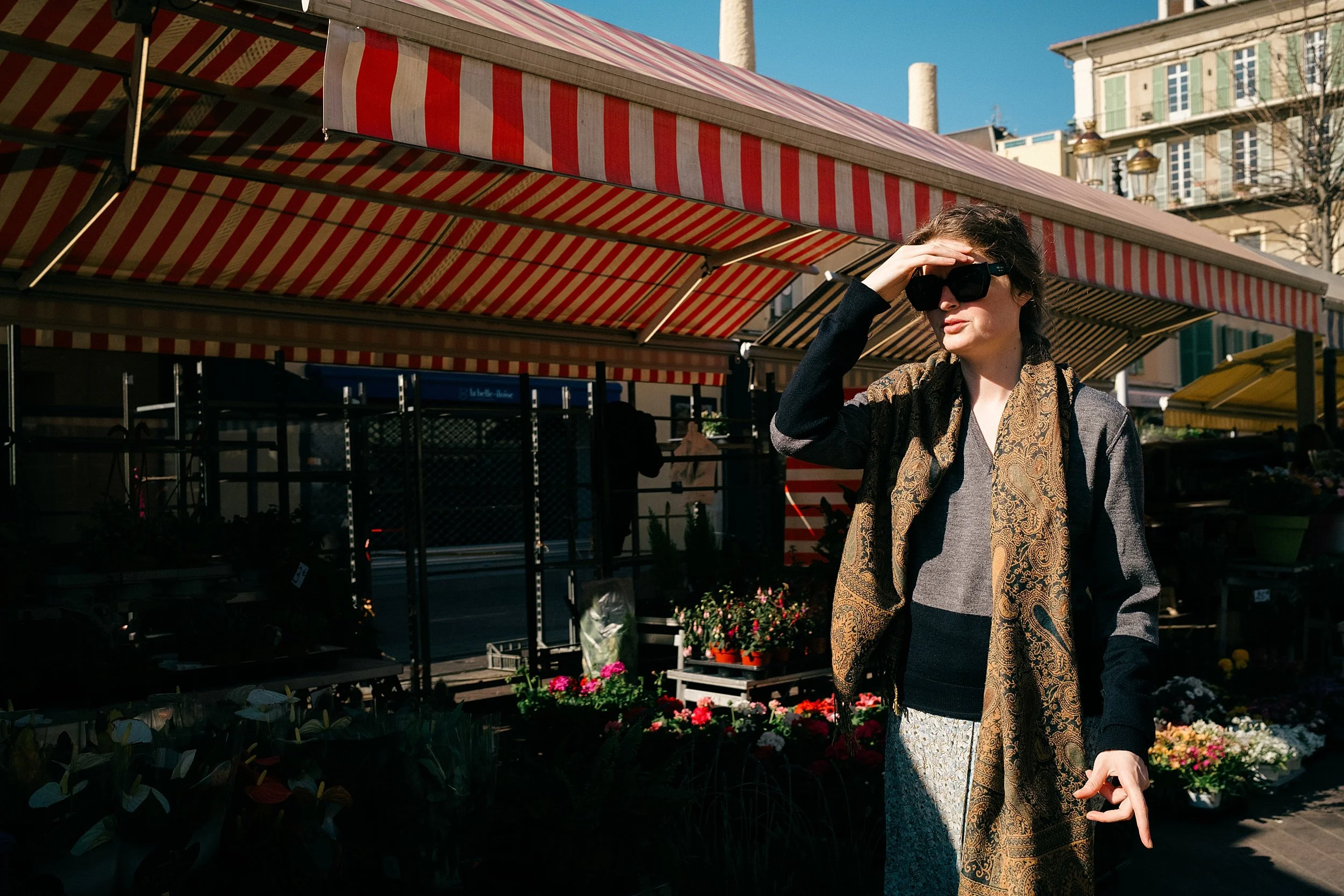
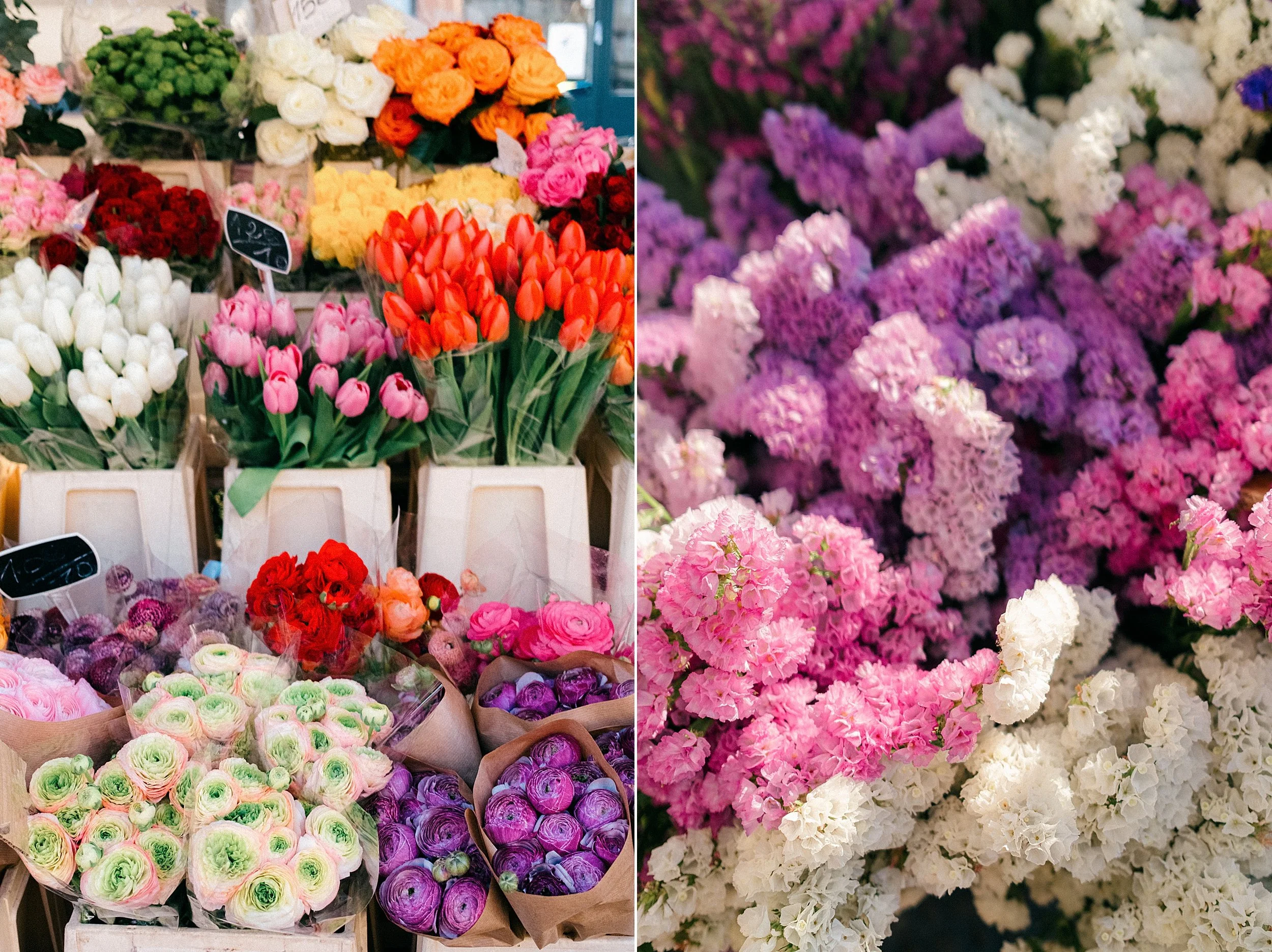
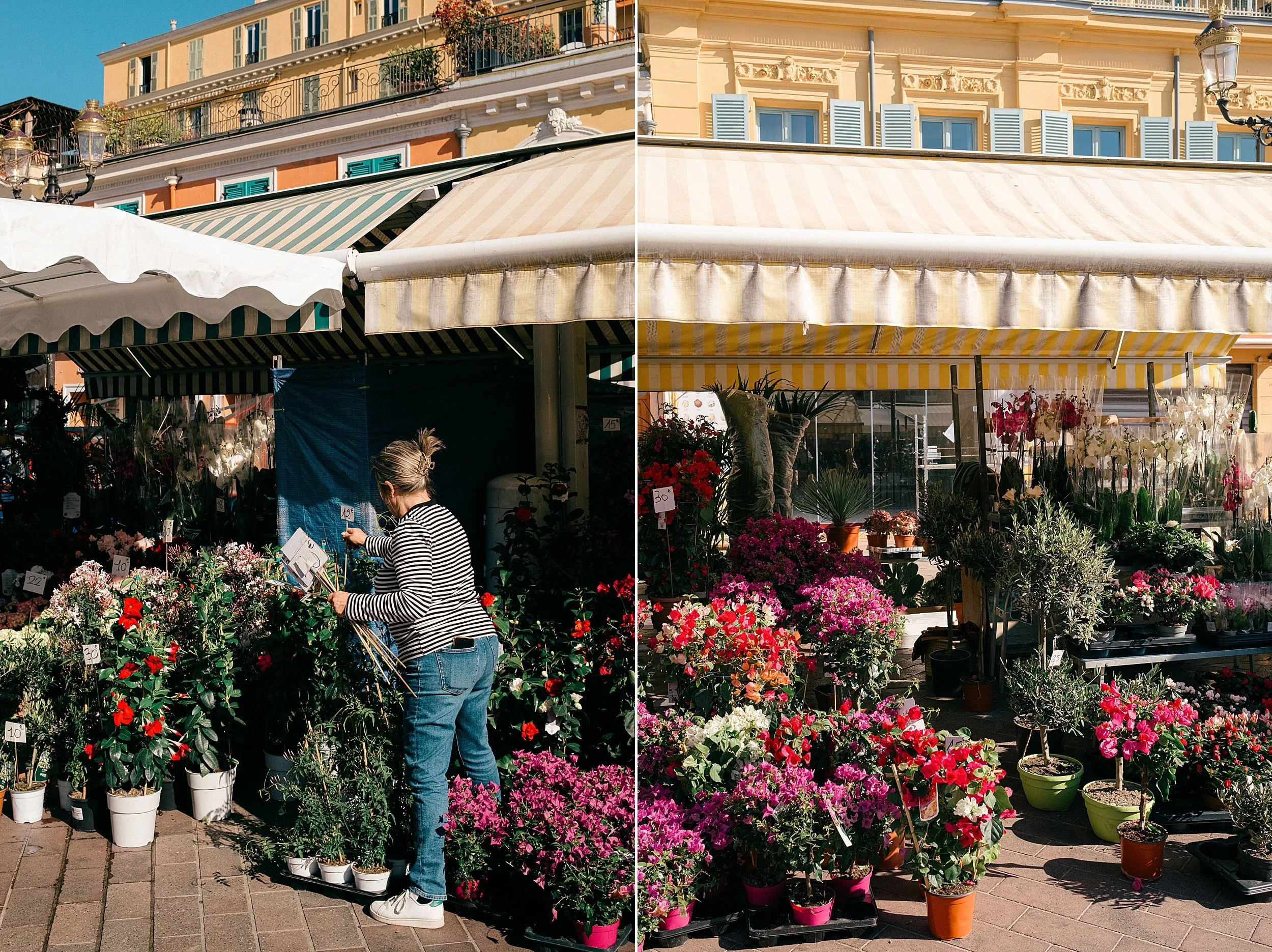
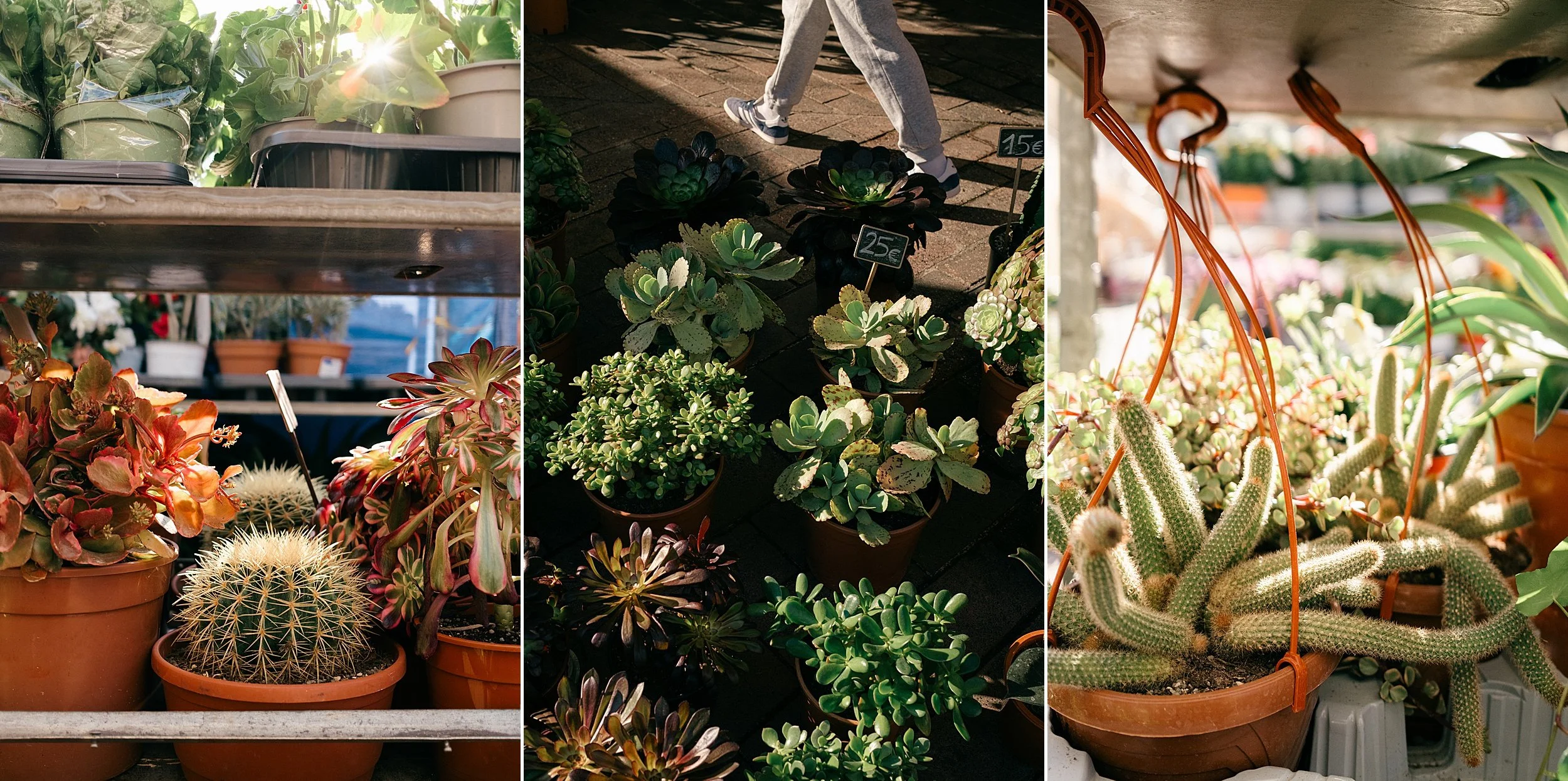
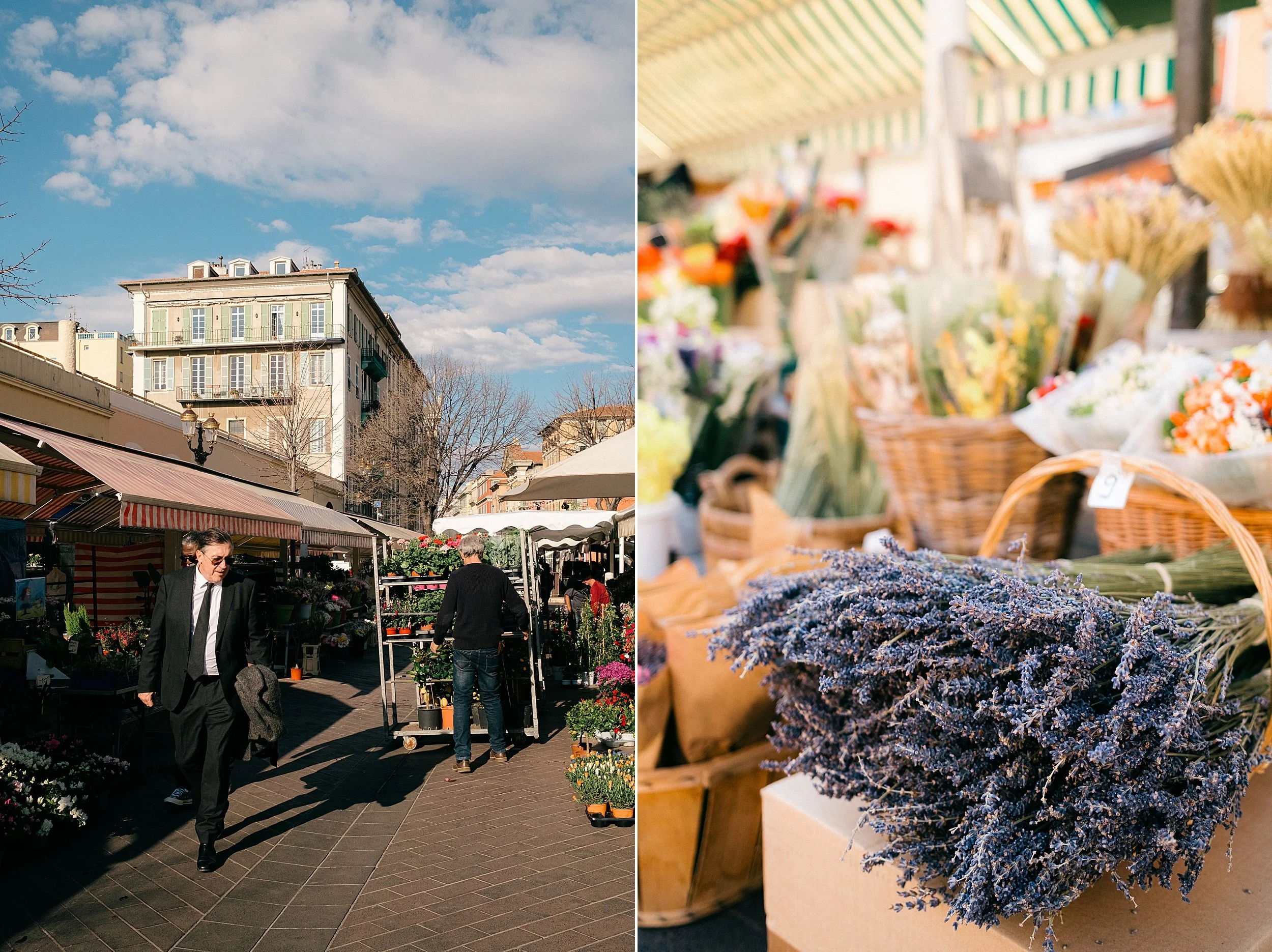
Cours Saleya
Port Lympia
Place Garibaldi, Place Masséna, Place Rosetti
A neighborhood Monoprix for everyday supplies
Right near a tram stop on the Red line that took us directly to the train station, it was the kind of location I’d actively seek out again. Making good use of the trams saved us so much time and walking. And with the Pass Sud d’Azur, we hopped off and on the tram and TER train whenever we pleased.
If you’re debating Old Town versus newer neighborhoods in Nice, this border zone between Vieux Nice and the port felt truly ideal, atmospheric but not overwhelmed by tourism.
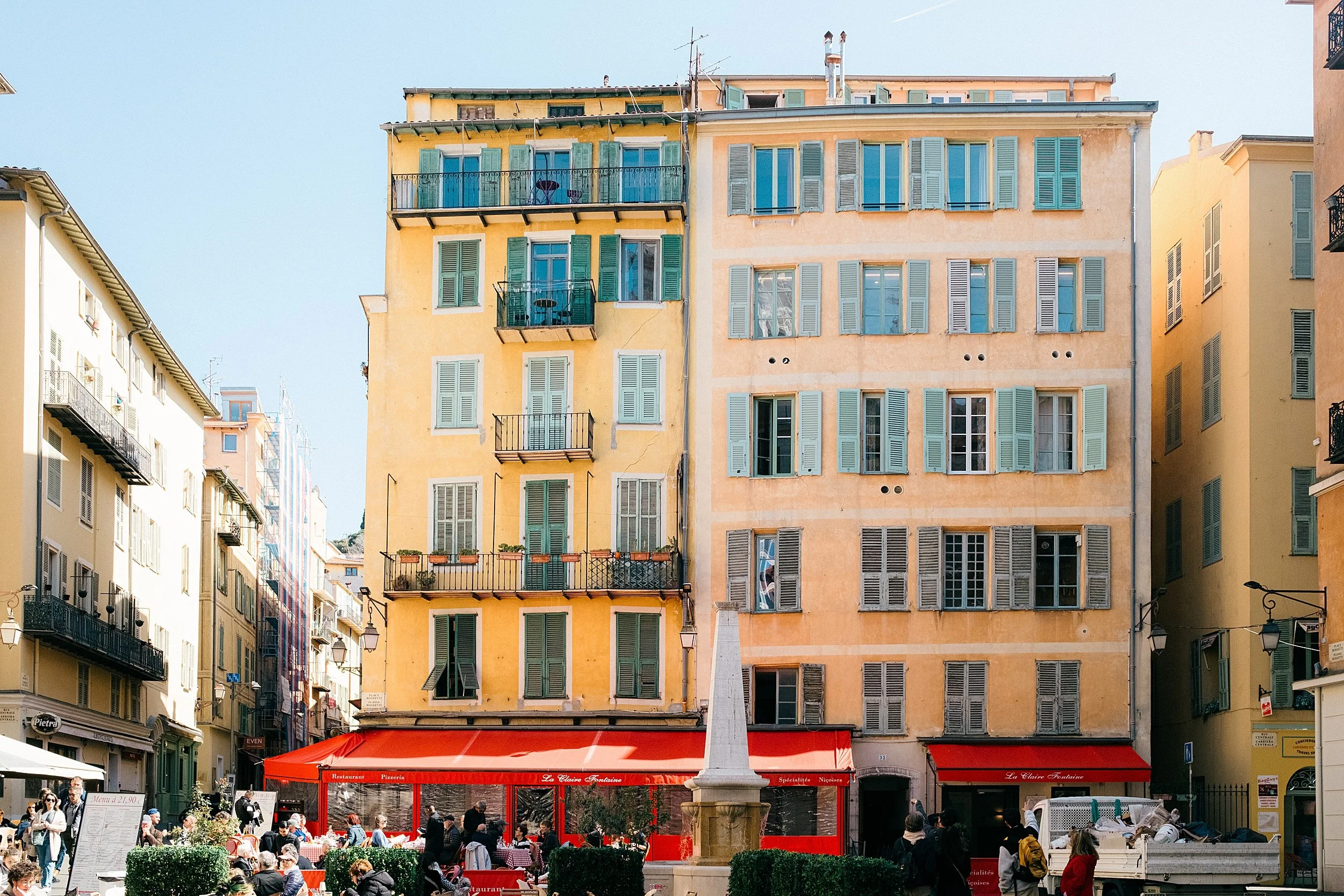
Arrival in Nice: Settling Into the Riviera
Our first afternoon in Nice was intentionally low key.
After checking into the apartment, we took our first walk along the Promenade des Anglais, absorbing that unmistakable Riviera light, then made the practical but necessary pilgrimage to Monoprix for basics. Wine, breakfast supplies, snacks, bottled water.
That small ritual became part of the rhythm of the trip.
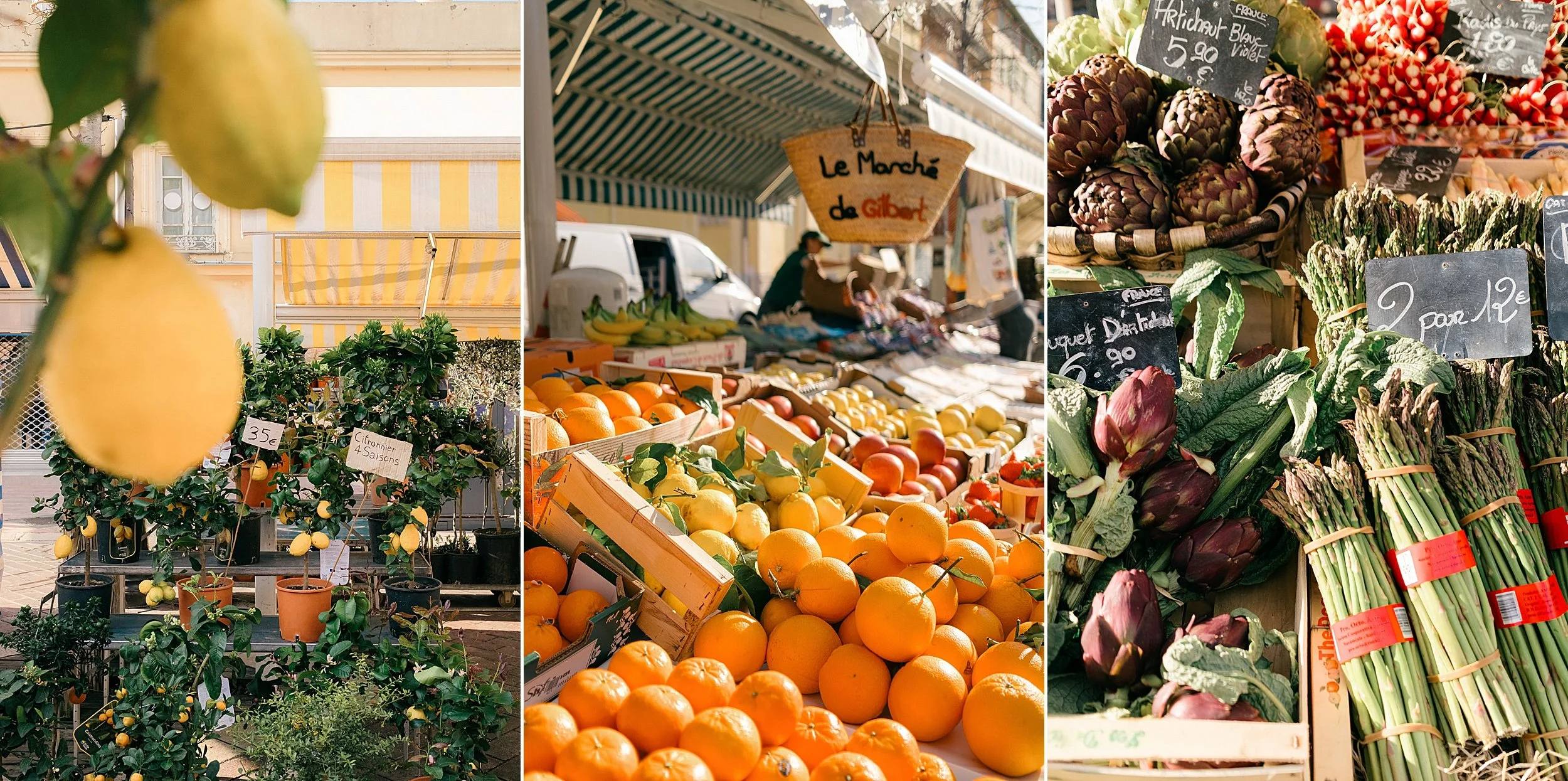
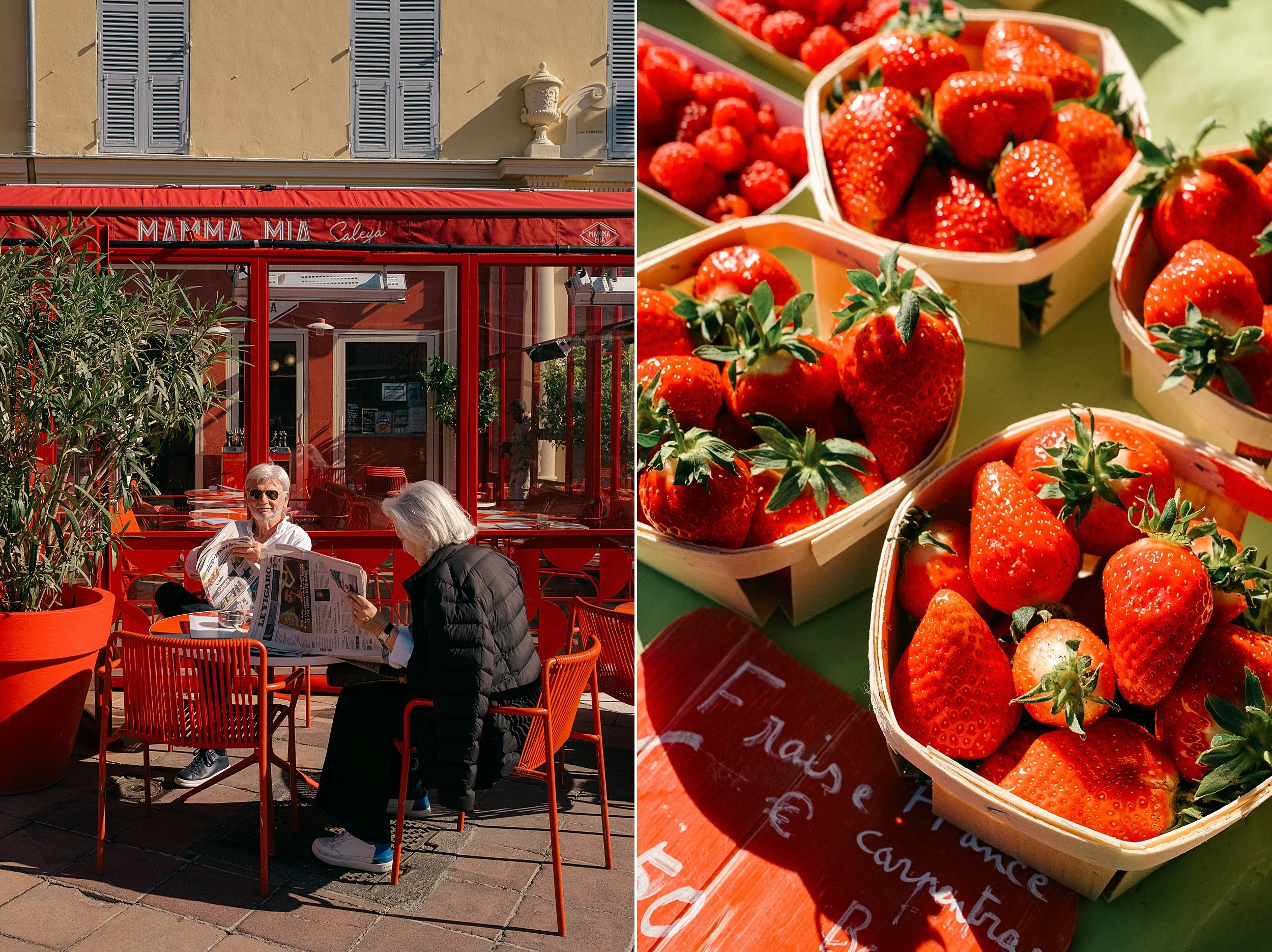
One of the underrated pleasures of staying in an apartment in Nice versus a hotel is being able to return from a day trip and slip back into neighborhood life. Grab fruit from a market stall. Sit in Place Garibaldi with a coffee. Wander Old Town at dusk.
This was less “three days in Nice itinerary” and more learning how the city functions. An added bonus for me is that it left plenty of time for street photography.
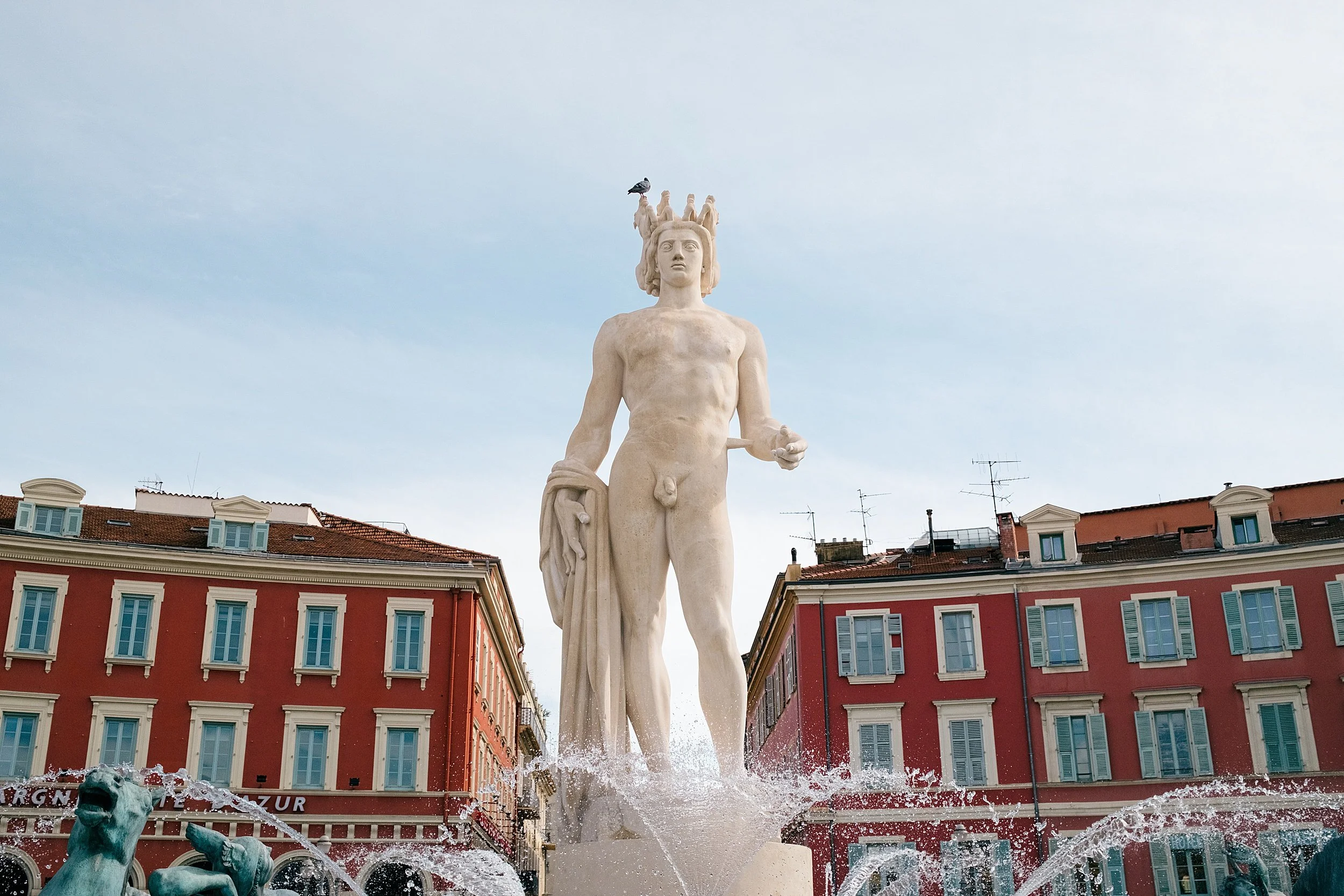
Exploring Nice Between Day Trips
That was really the beauty of using Nice as a base. The city unfolded in layers between excursions.
Some evenings were little more than a quick dinner after a full day elsewhere.
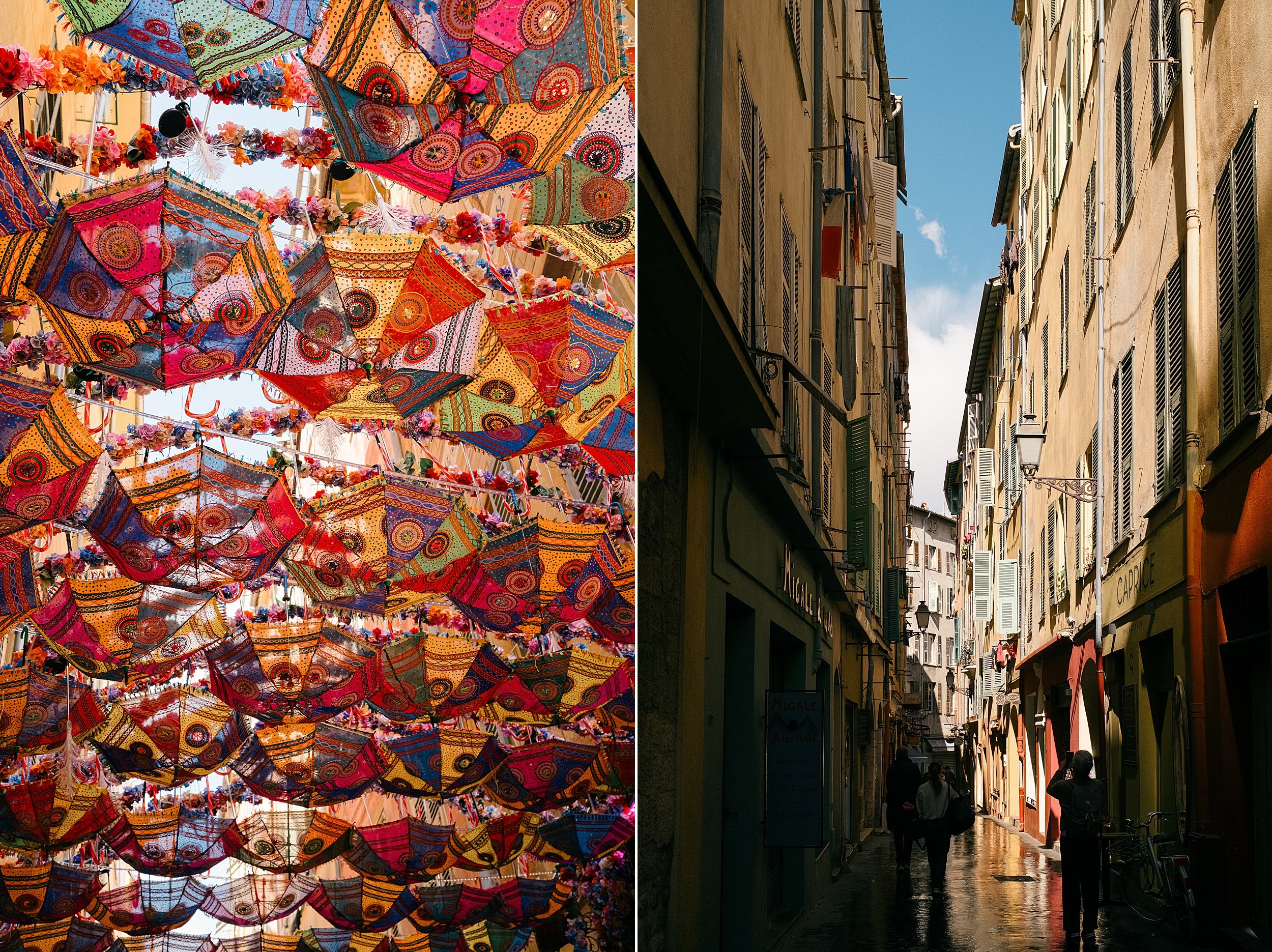
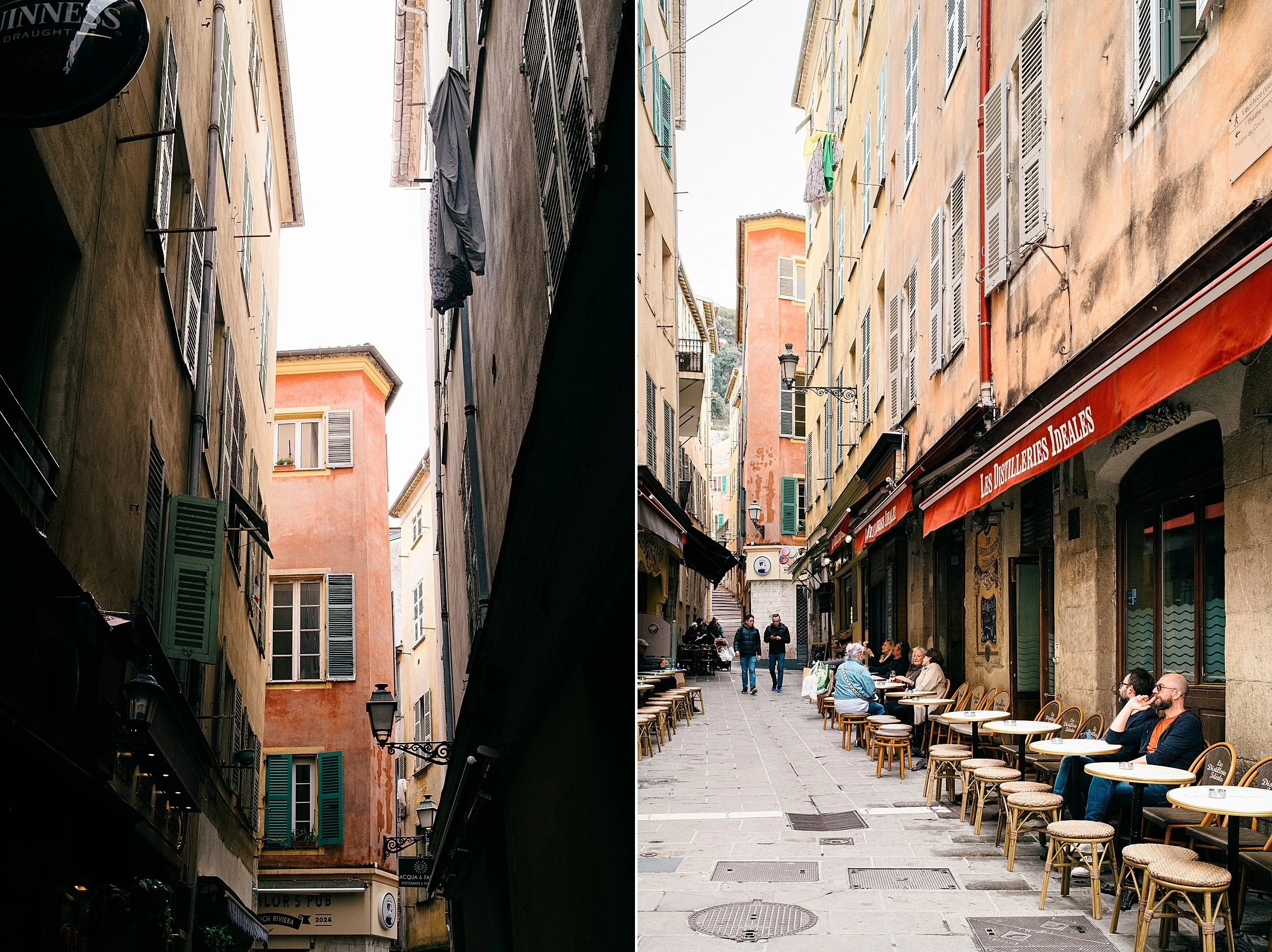
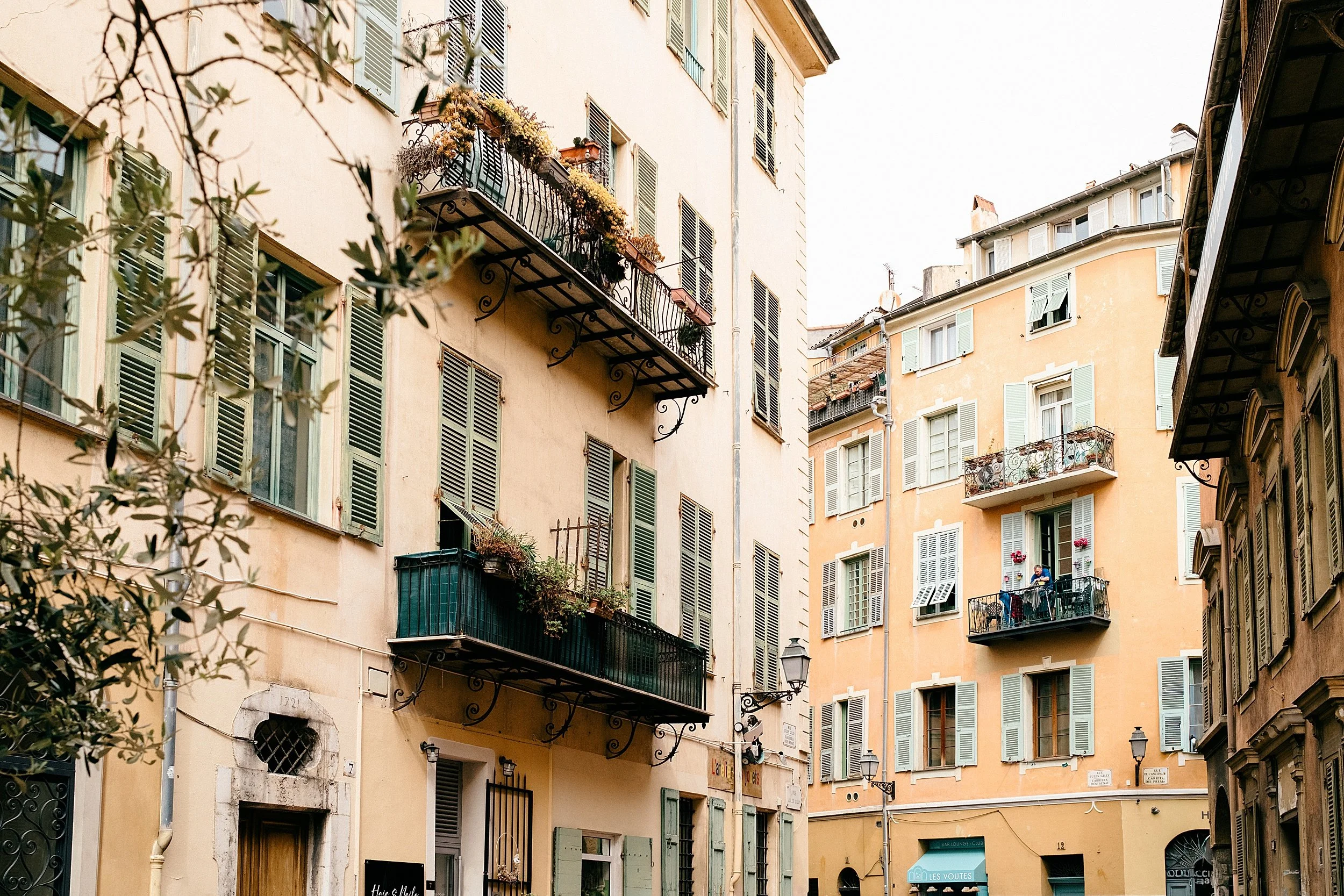
Other afternoons became slow explorations through the old quarter, where laundry hangs above ochre alleyways and every turn seems designed for a camera.
Even an unplanned detour, when I lost half a day to what was either food poisoning or norovirus, ended up changing how I experienced Nice. Once I could finally make it outside, I wandered Vieux Nice slowly, taking in baroque façades, tucked-away squares, and local life at a pace I might otherwise have rushed past.
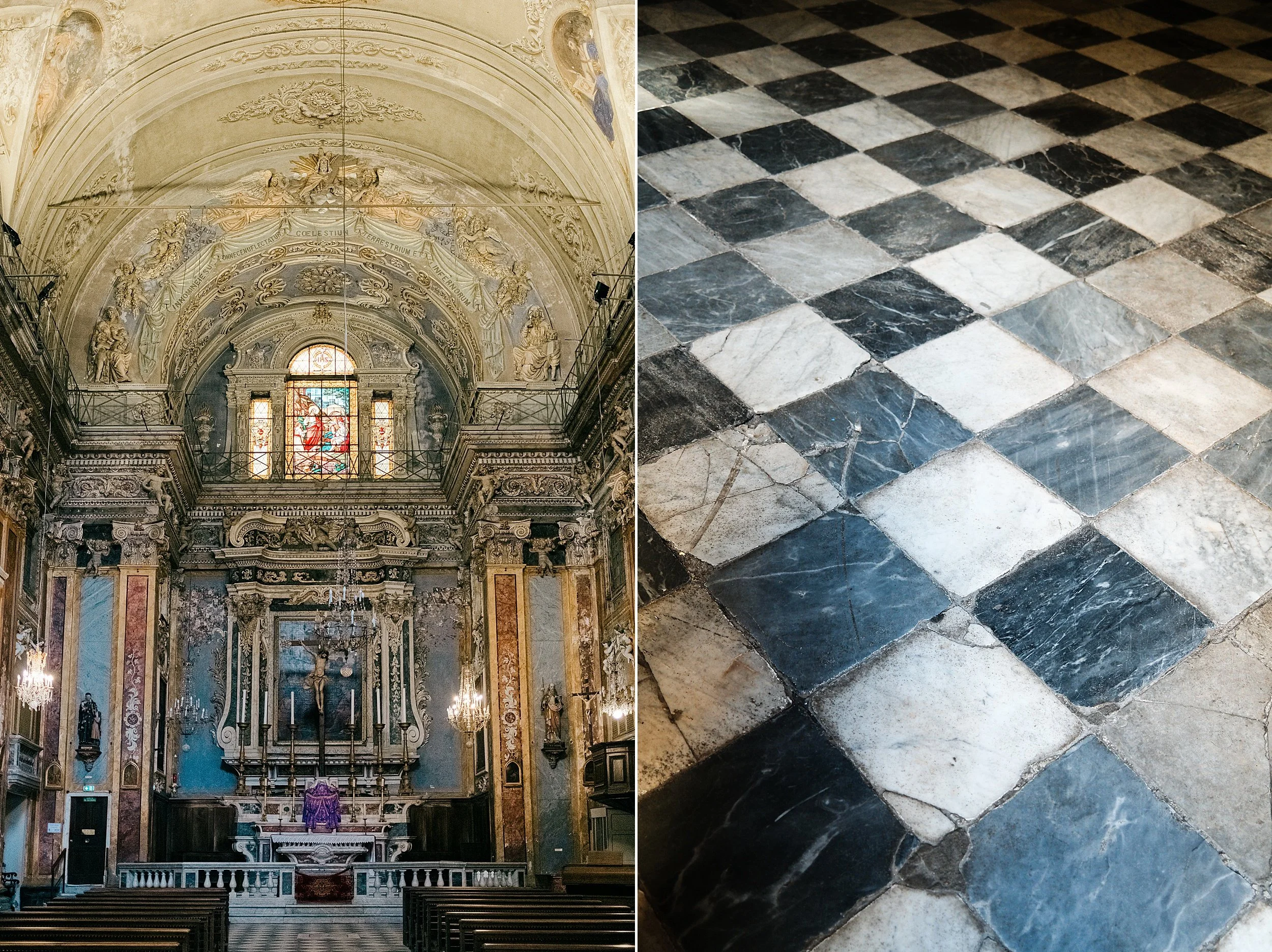
Antibes offered a beautiful half-day, full of harbor atmosphere and old stone streets.
Villefranche-sur-Mer, especially on Sunday market day, delivered one of the trip’s most memorable mornings.
Melissa pushed onward one day to Ventimiglia across the Italian border. I opted out, distrustful of my recovering stomach and, frankly, unconvinced it would be worth the hour long train ride. (Her report later confirmed my suspicions.) Instead, I walked down to explore Port Lympia on my own.
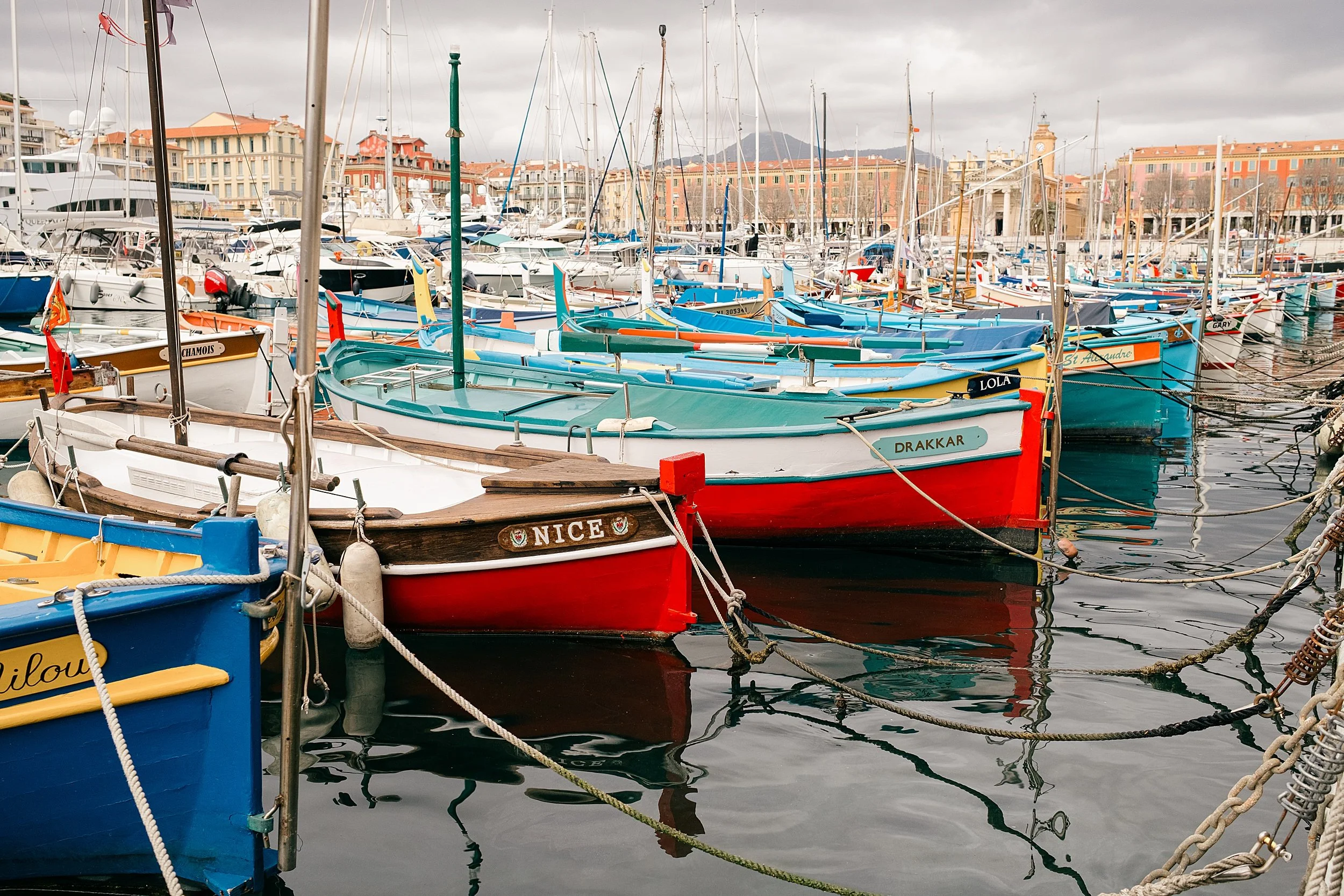
That balance worked well, some outings together, some solo detours, all returning to Nice.
Sunday Market in Villefranche and Why You Should Still Return to Nice
One of our favorite side trips was Sunday market day in Villefranche-sur-Mer.
It’s easy to understand why this fishing village ends up on so many French Riviera itineraries, pastel facades, fishing boats, steep stairways, and one of the prettiest bays in Europe.
But what made the day work was coming back to Nice afterward.
Back in town, I spent the afternoon exploring beyond the tourist core, walking through the Belle Époque districts north of Old Town, photographing faded grand hotels and ornate residential buildings that hint at Nice’s 19th century resort history.
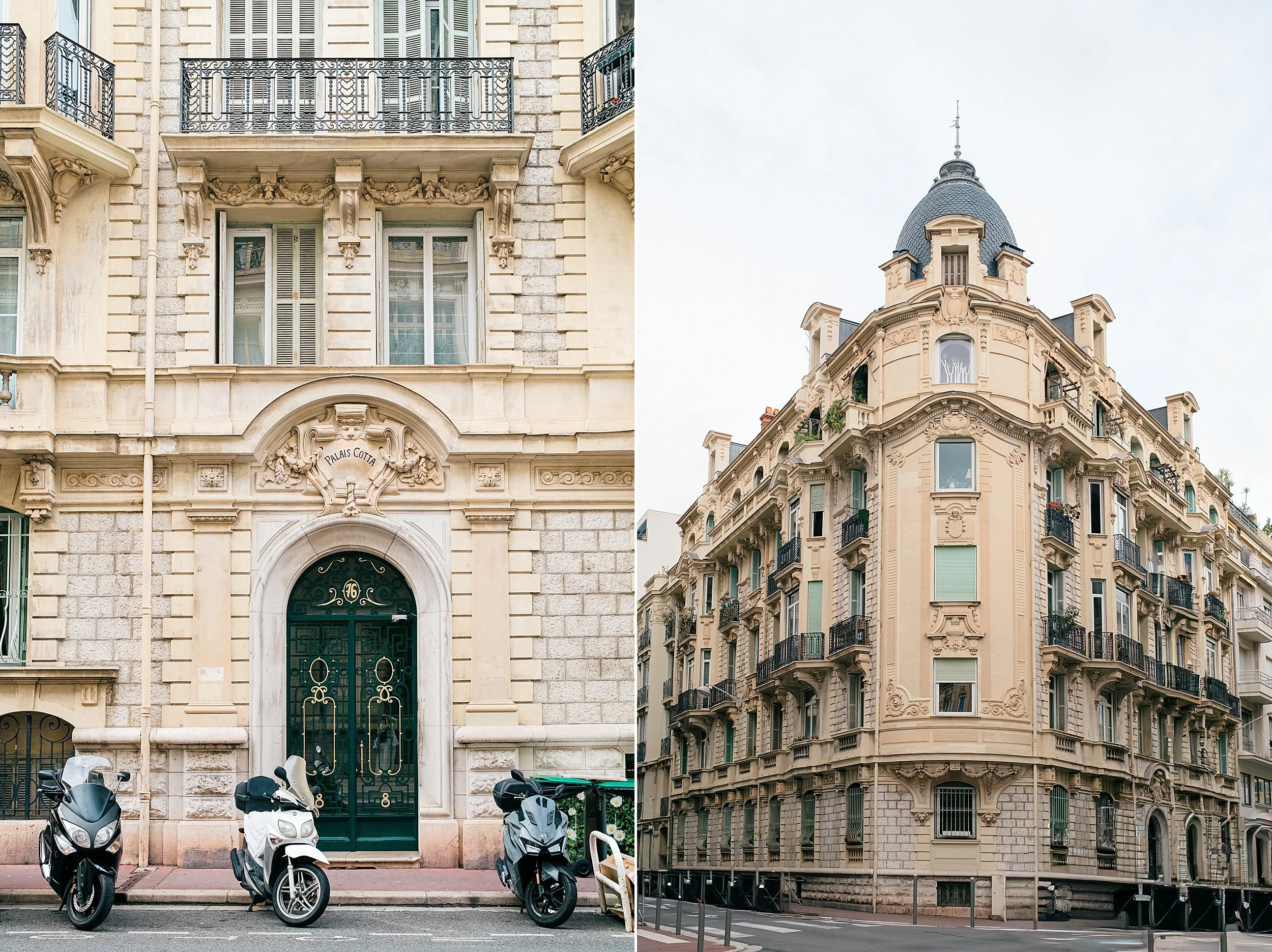
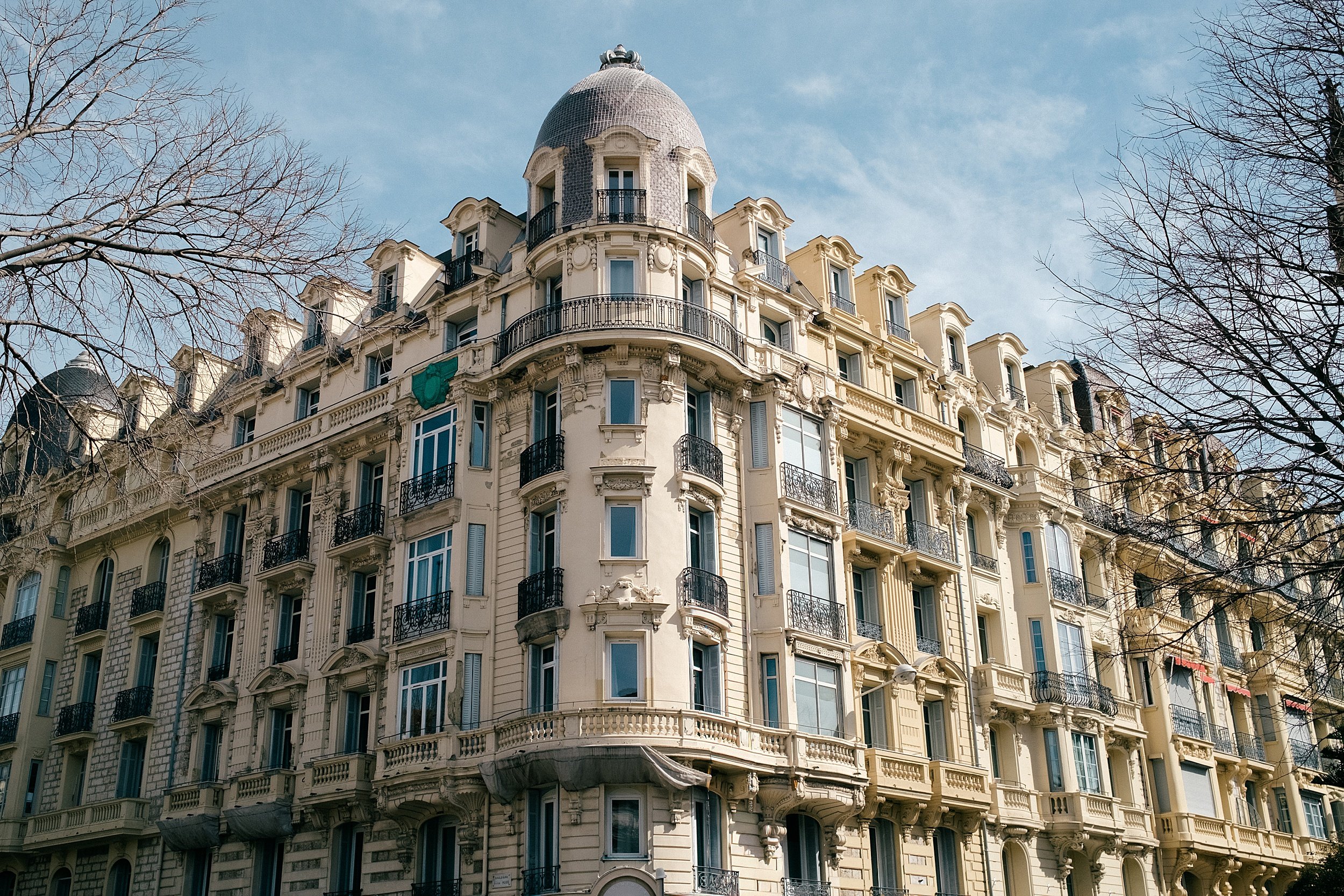
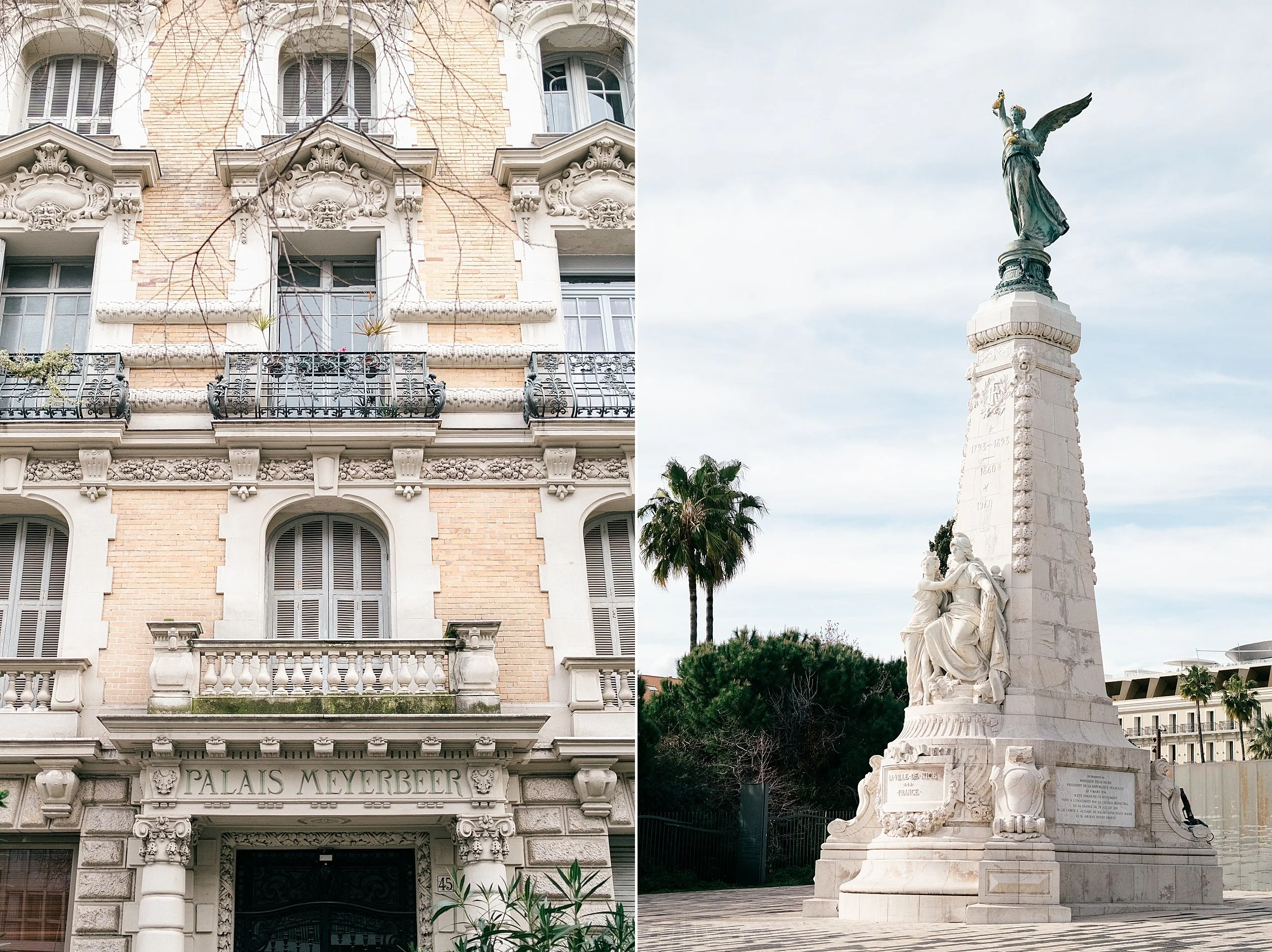
Many visitors stay inside the postcard frame of Old Town and the promenade.
That misses half the city.
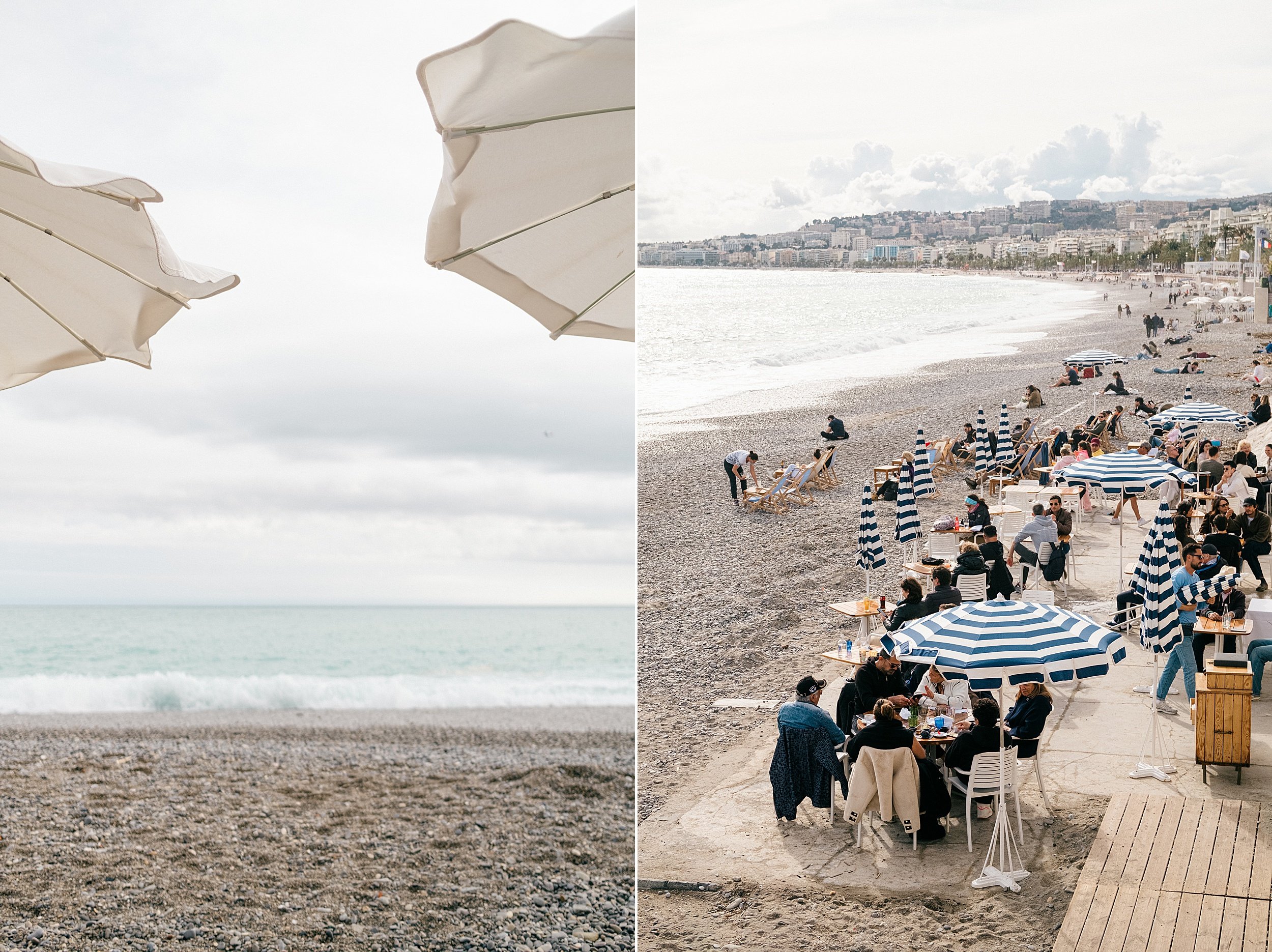
I ended the day with a meal and drink at Blue Beach, watching weather roll in over the Mediterranean.
Not a bad Sunday.
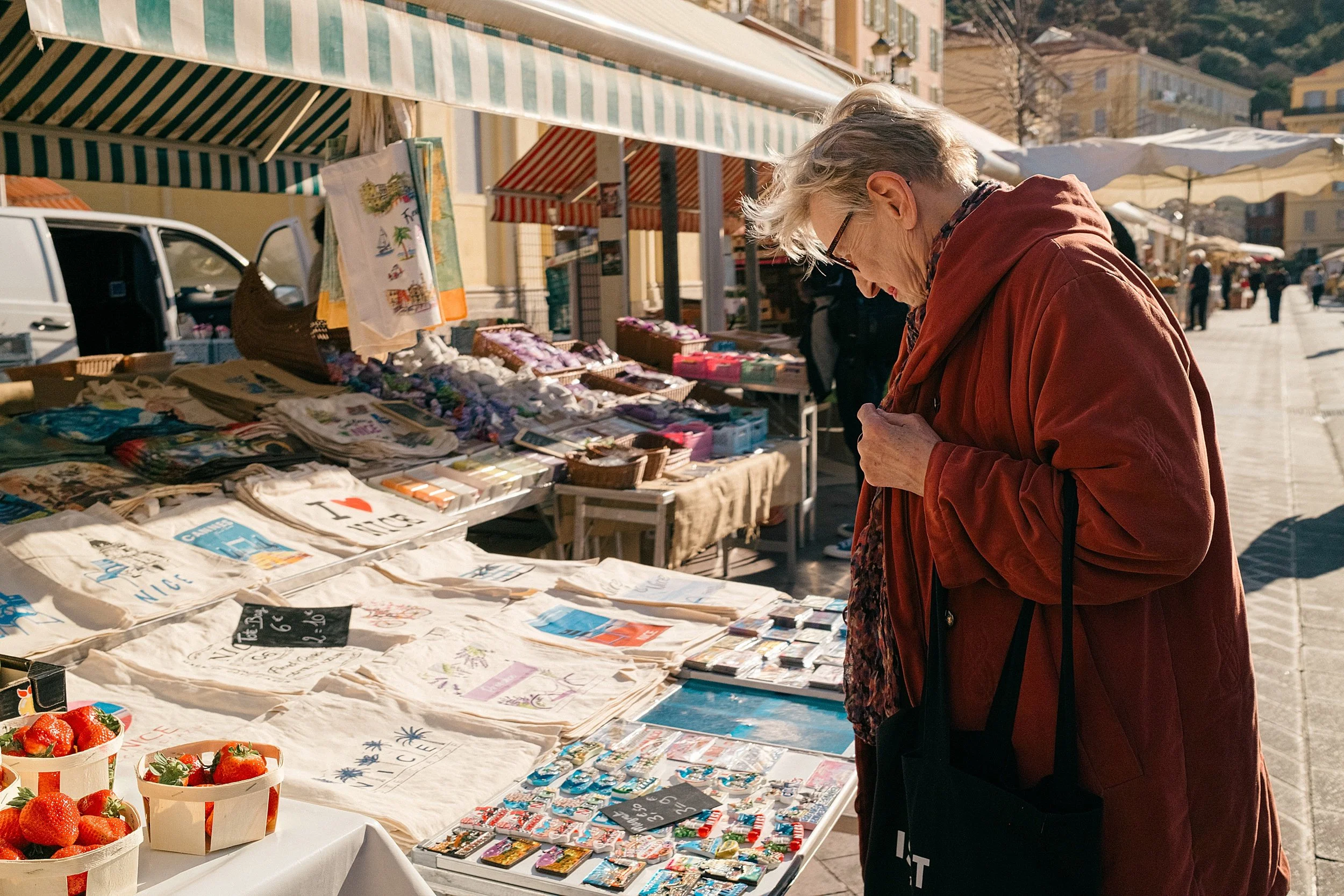
Monday Brocante at Cours Saleya
One reason we arranged our itinerary the way we did was simple: Monday is brocante day at Cours Saleya.
Most travelers know the flower market.
Far fewer realize Monday brings antiques dealers, vintage objects, old prints, linens, silver, books, postcards, and the kind of found objects travelers dream about discovering in France.
If you are planning a Nice market itinerary, it is worth timing your stay around it.
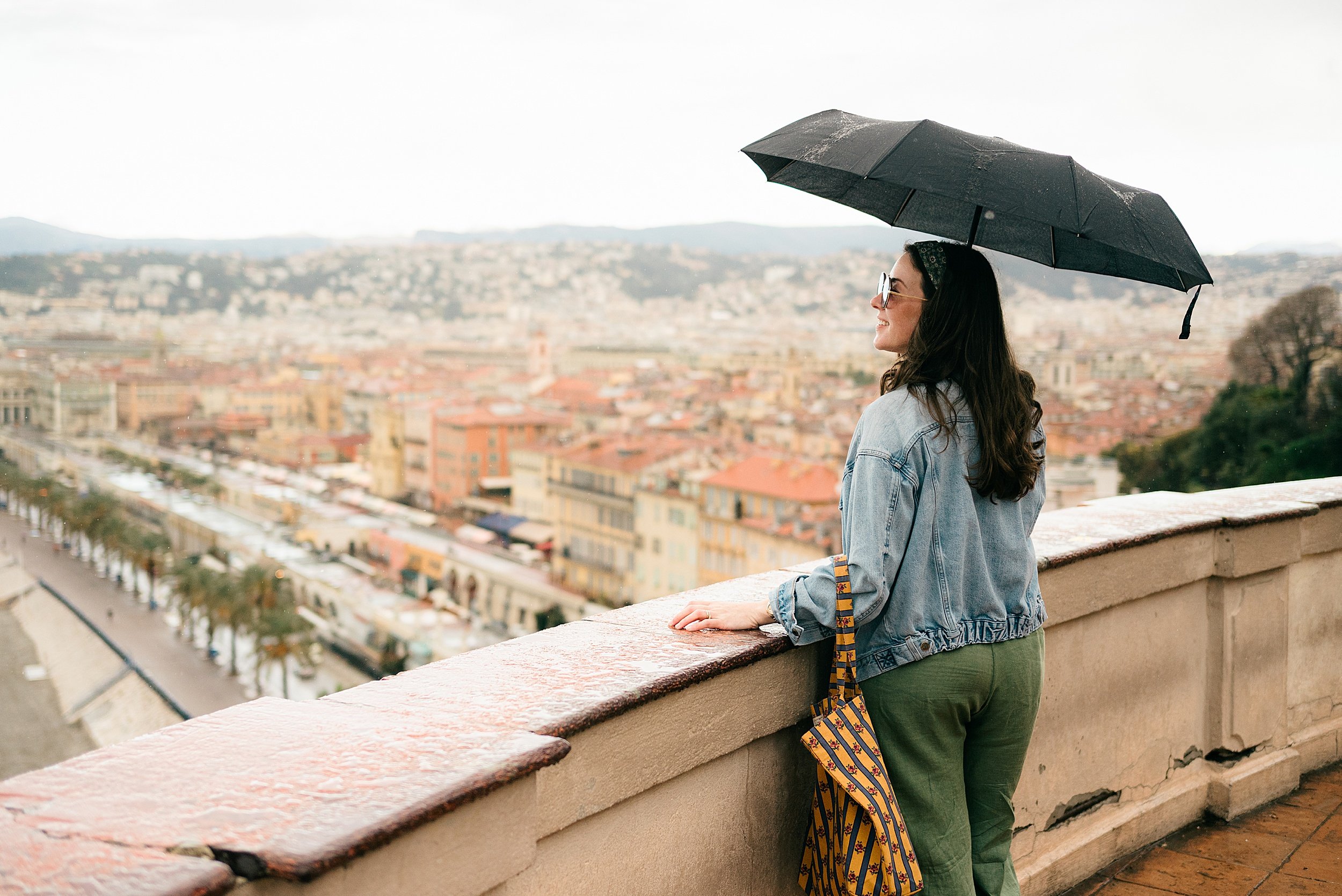
We started that morning at the famous I Love Nice Sign, climbed to Colline du Château for panoramic views over the Baie des Anges, then descended into the market.
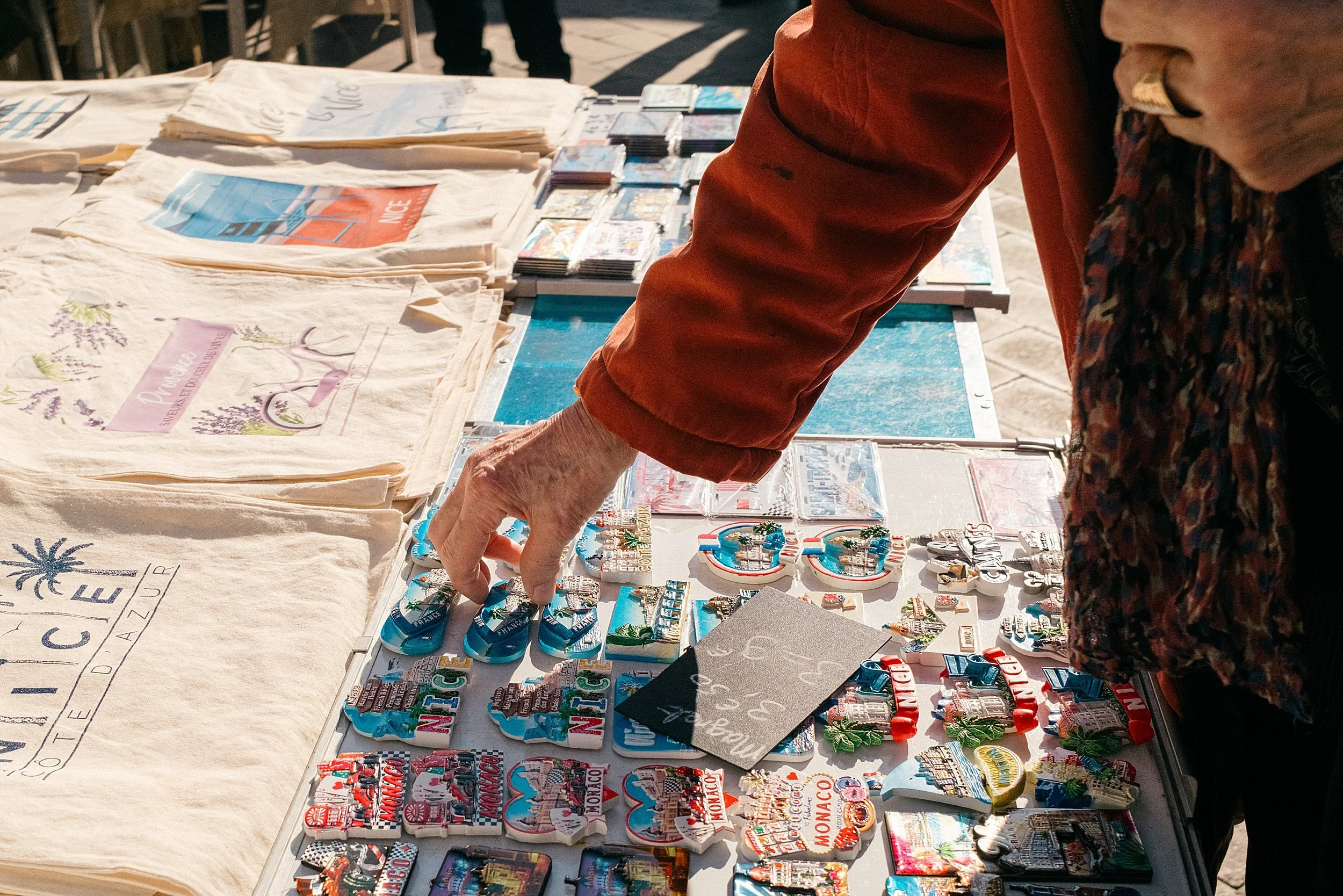
Rain kept attendance light, but we still found a few souvenirs worth bringing home.
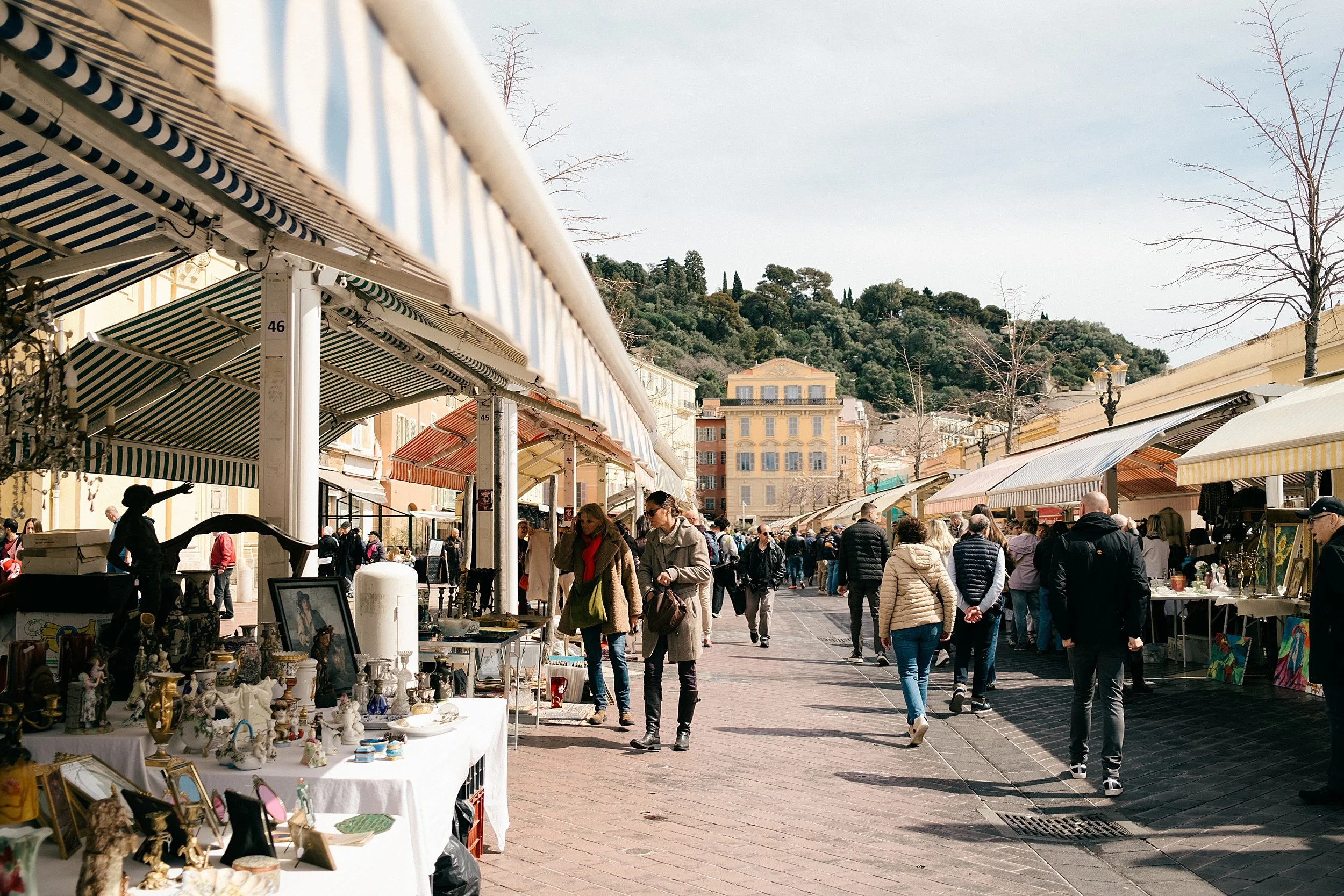

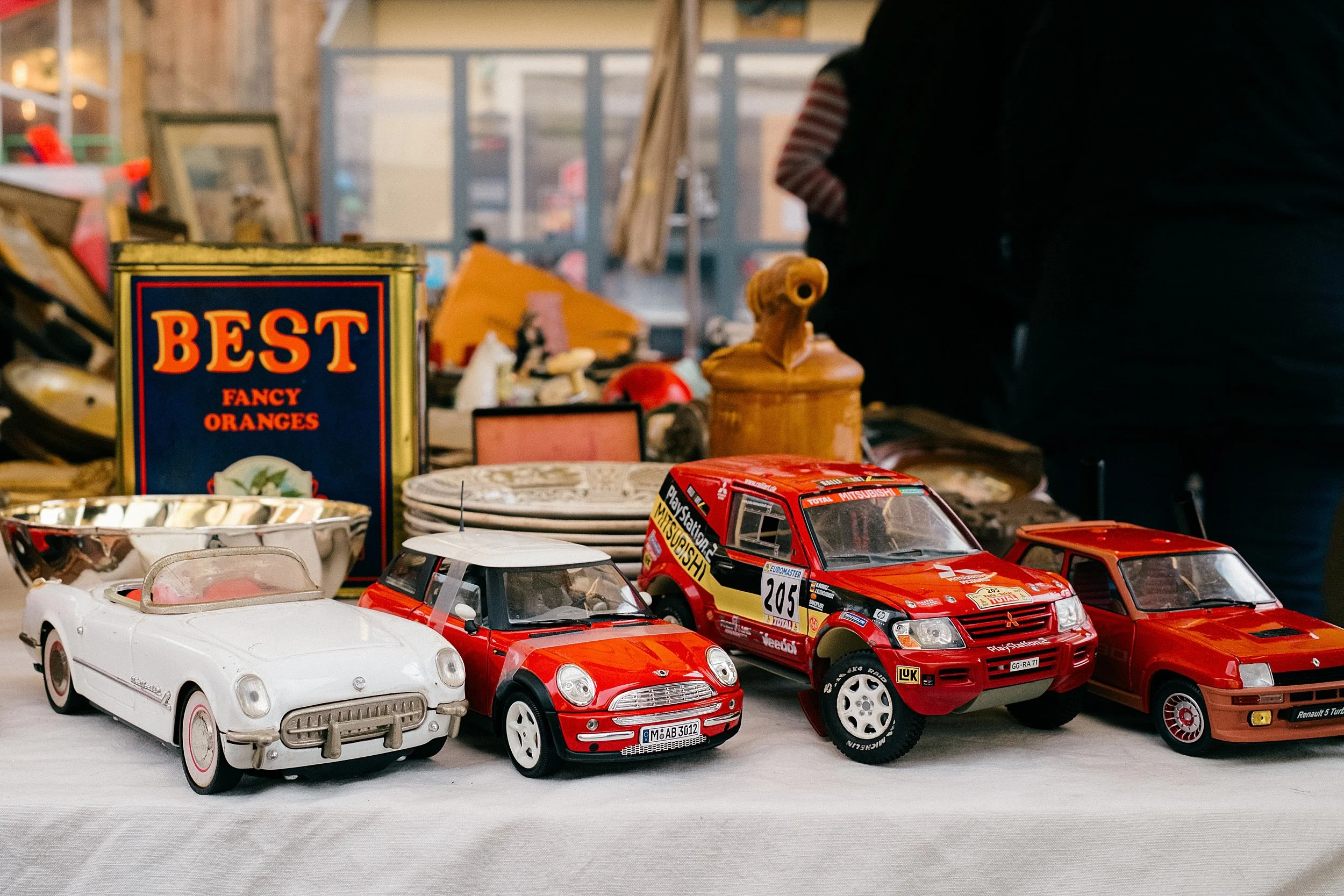
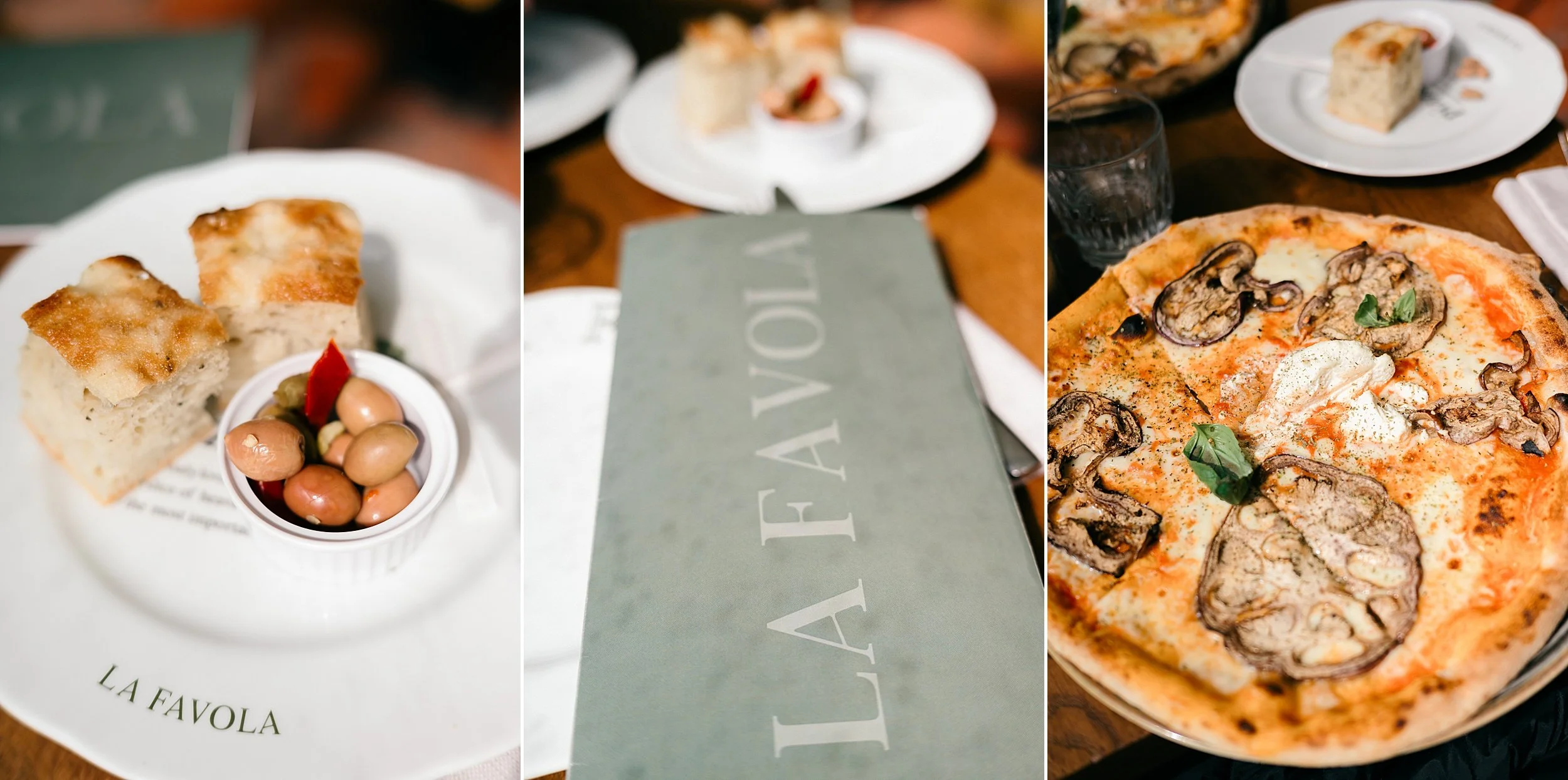
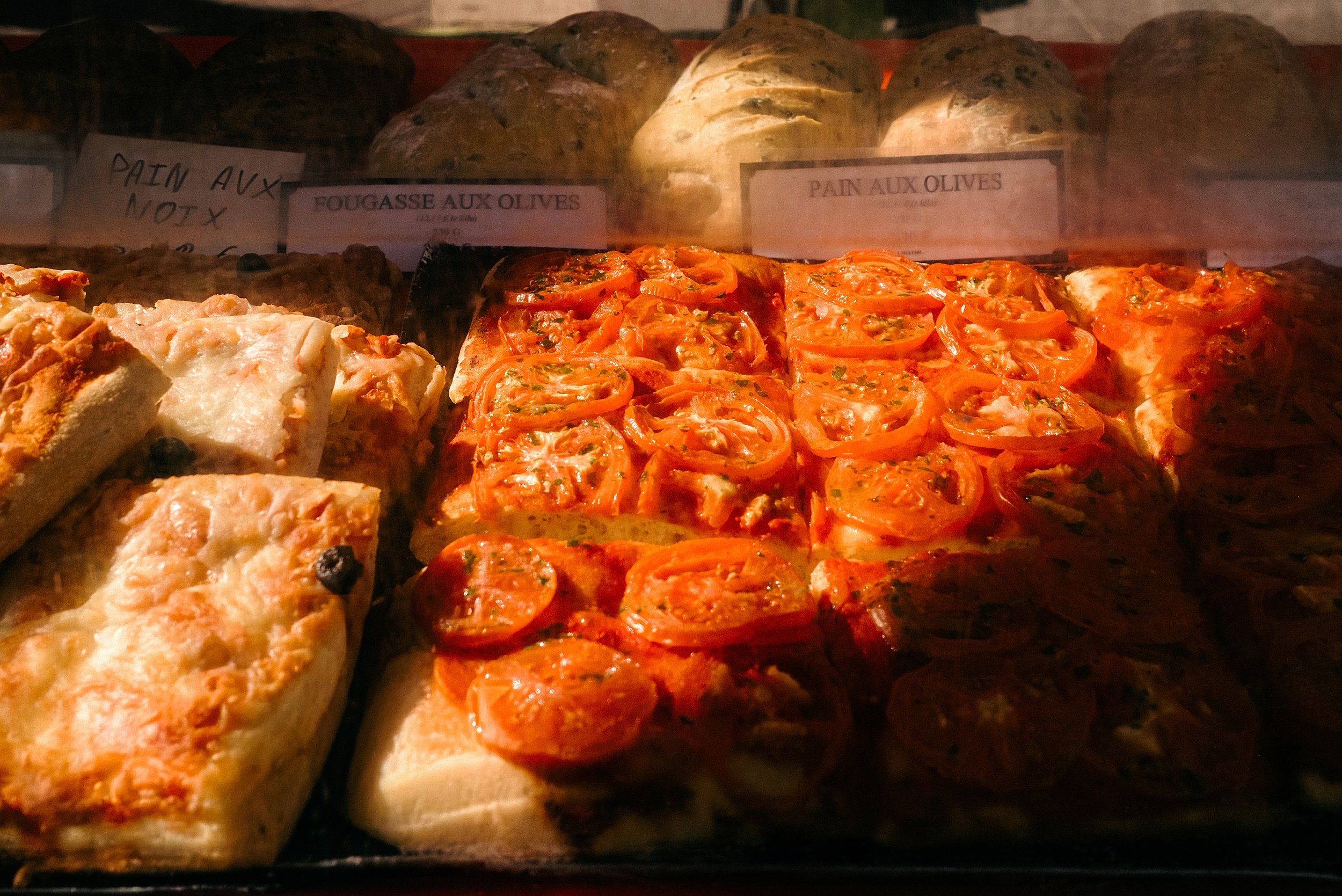
Lunch at La Favola deserves a mention for anyone looking for where to eat in Nice Old Town. Excellent pizza, lively atmosphere, and far better than many of the tourist-heavy options nearby.
Afterward Melissa was done for the day.
I kept walking.
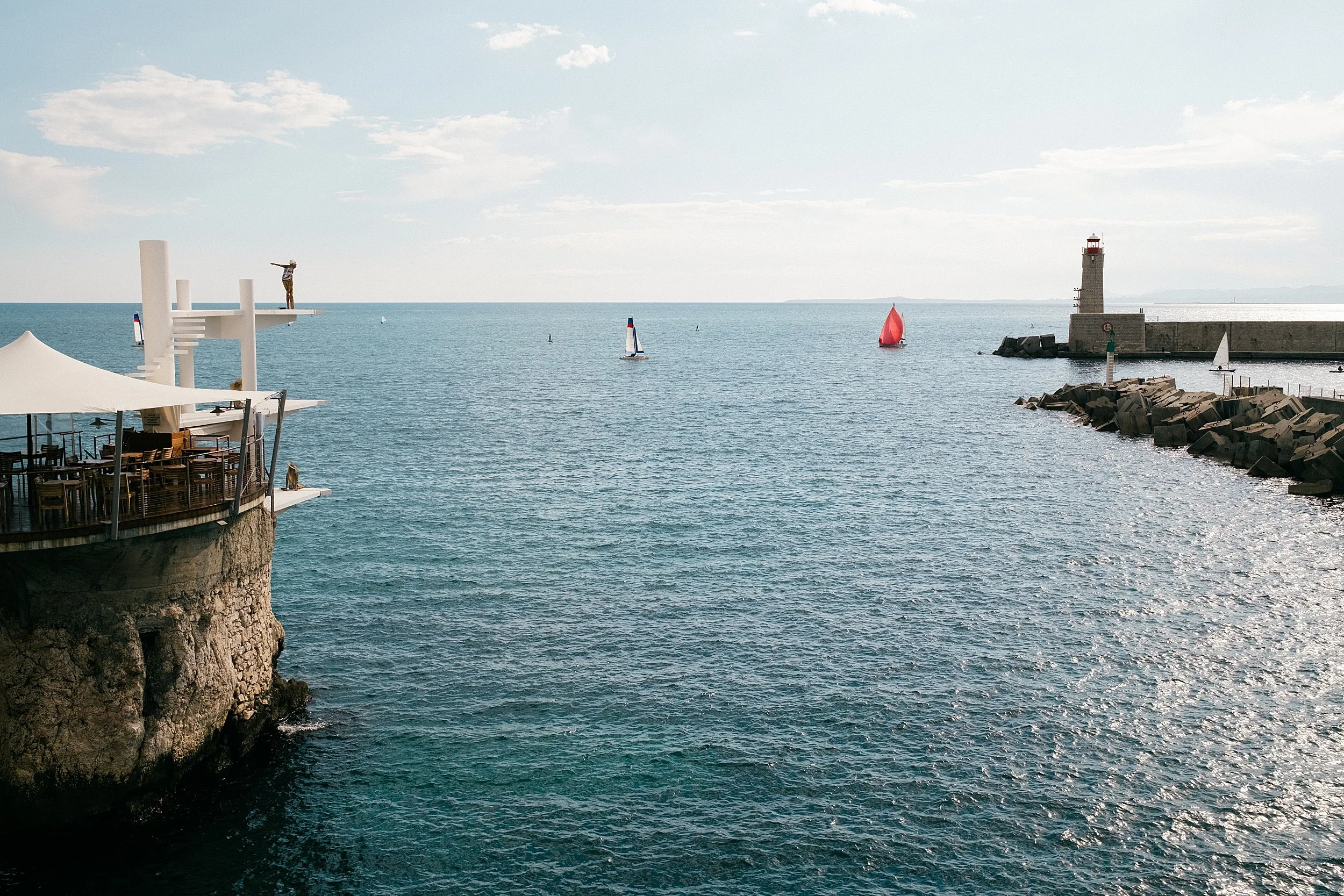
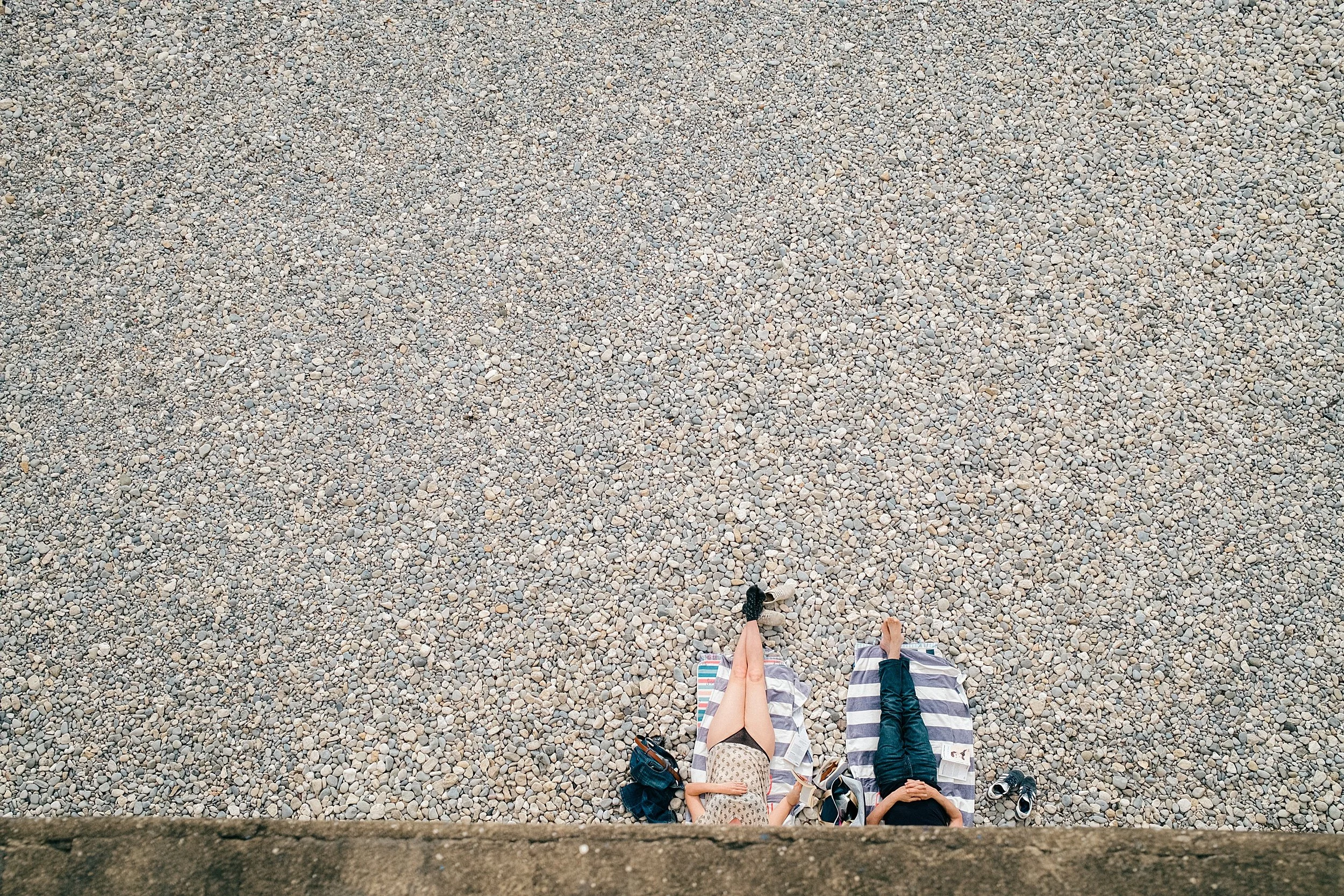
Out to the port. Past fishing boats and faded facades. Further east toward Le Plongeoir. Back through Old Town. Then onto the promenade as late afternoon light turned the beachfront into a street photography stage set.
That full day alone justified choosing Nice as a base.
Liberation Market: The Nice Most Tourists Miss
If you search hidden gems in Nice, this is mine.
Marché de la Libération.

On my final morning before catching the train to Aix-en-Provence, I packed early and spent my last hours exploring neighborhoods most visitors never reach.
After shooting around Place Masséna, I headed north to Libération.
It was one of the most rewarding parts of the week.
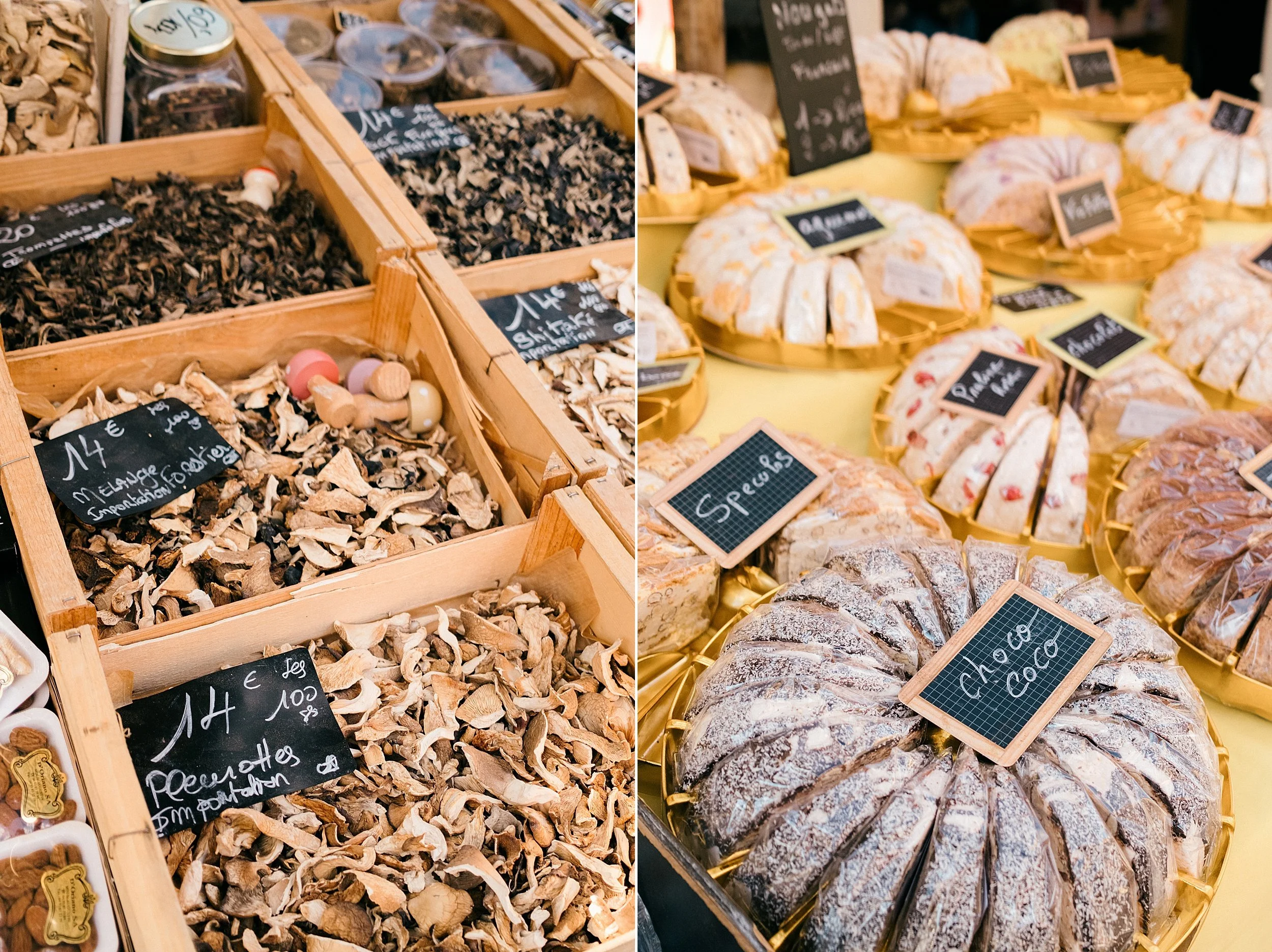
This is a true local food market, produce stalls spilling into the street, fishmongers, rotisserie chickens turning, Niçois grandmothers bargaining over vegetables.
And people talk.
Vendors ask where you’re from.
Locals strike up conversations.
It feels less curated than Cours Saleya and far more rooted in daily life.
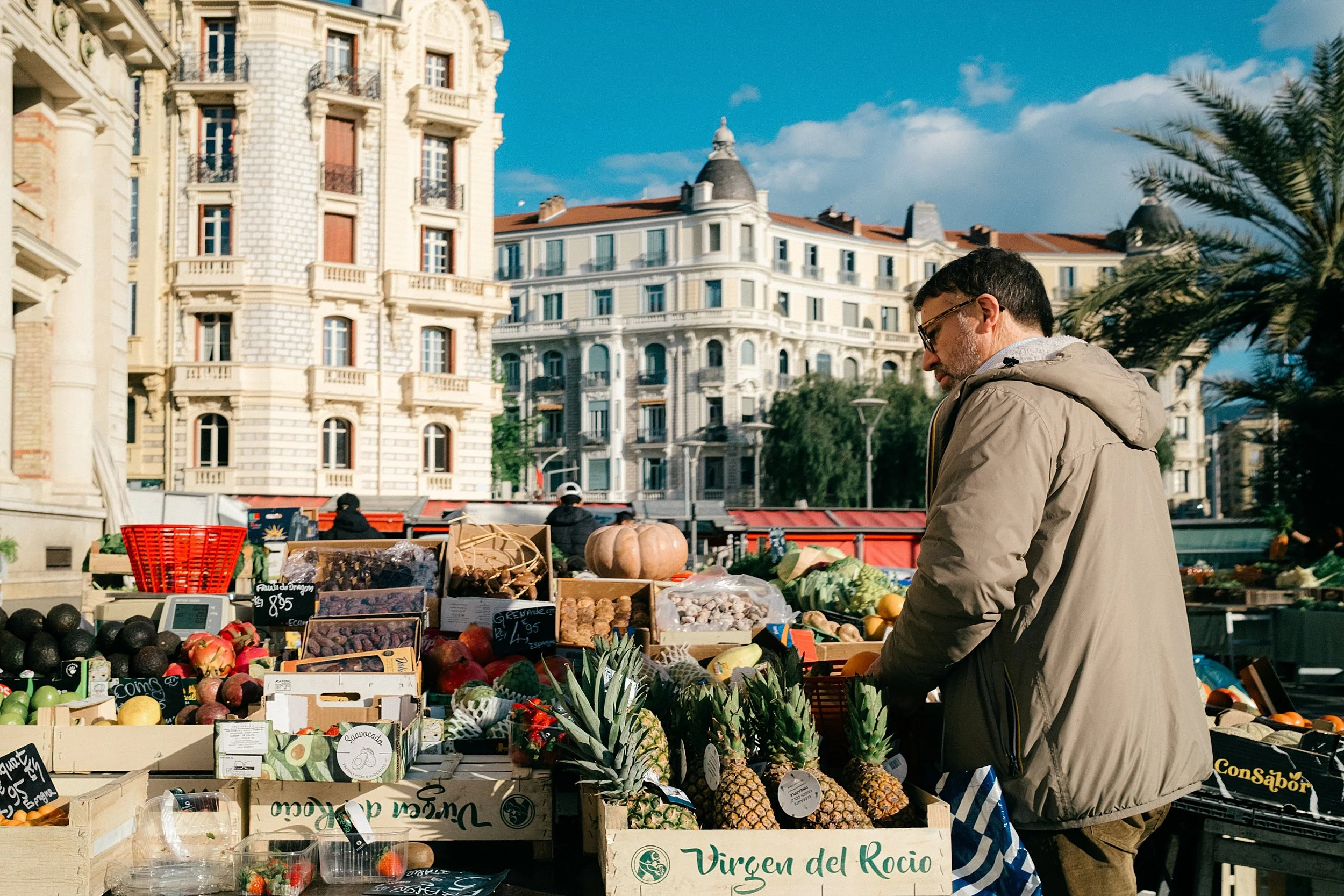
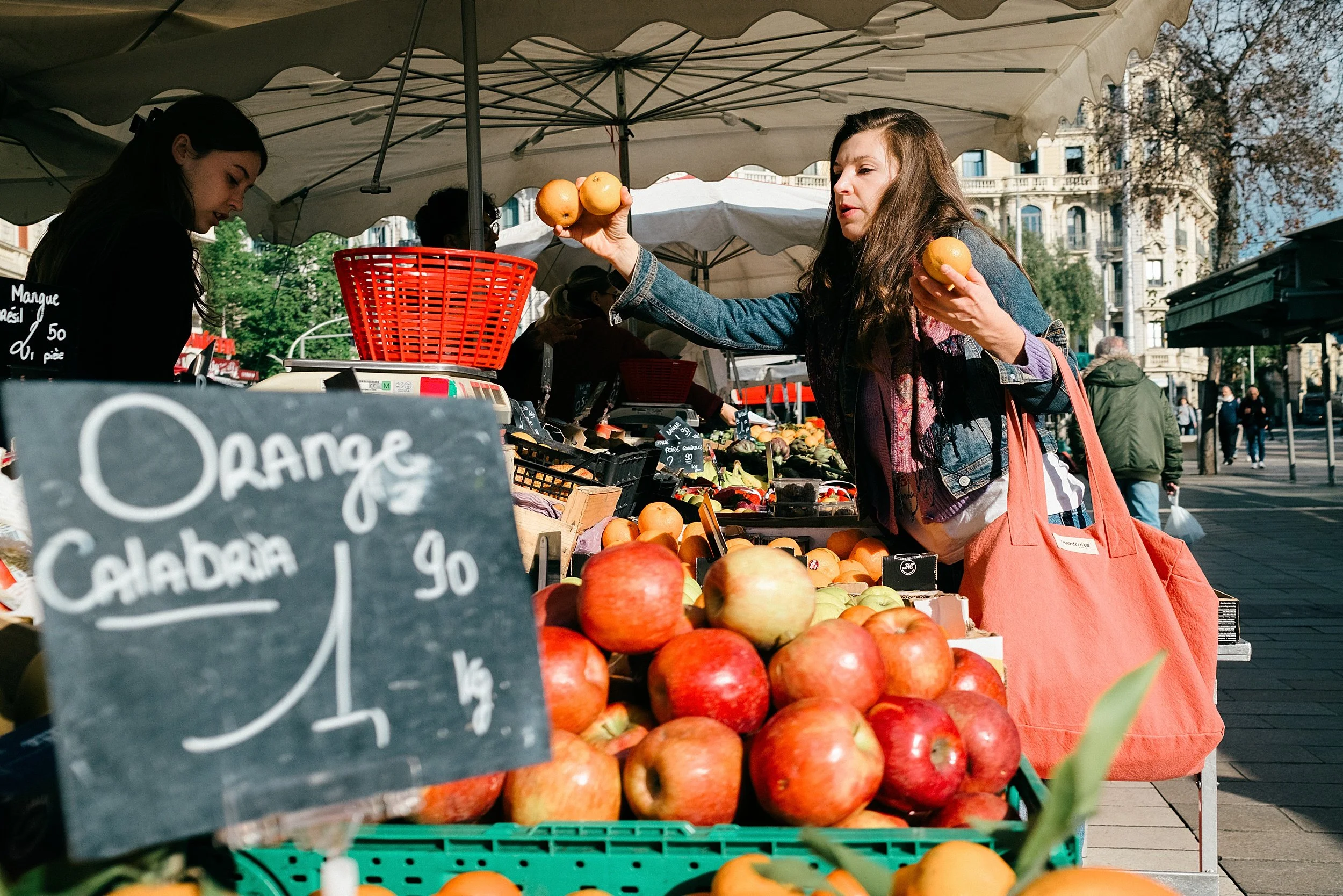
Nearby, the restored Gare du Sud and surrounding Haussmann-style blocks make the neighborhood worth visiting even beyond the market.
For anyone wanting authentic Nice beyond tourist attractions, put this on your list
Nice and Street Photography
Street photography threaded through every day.
That’s partly why Nice worked so well.
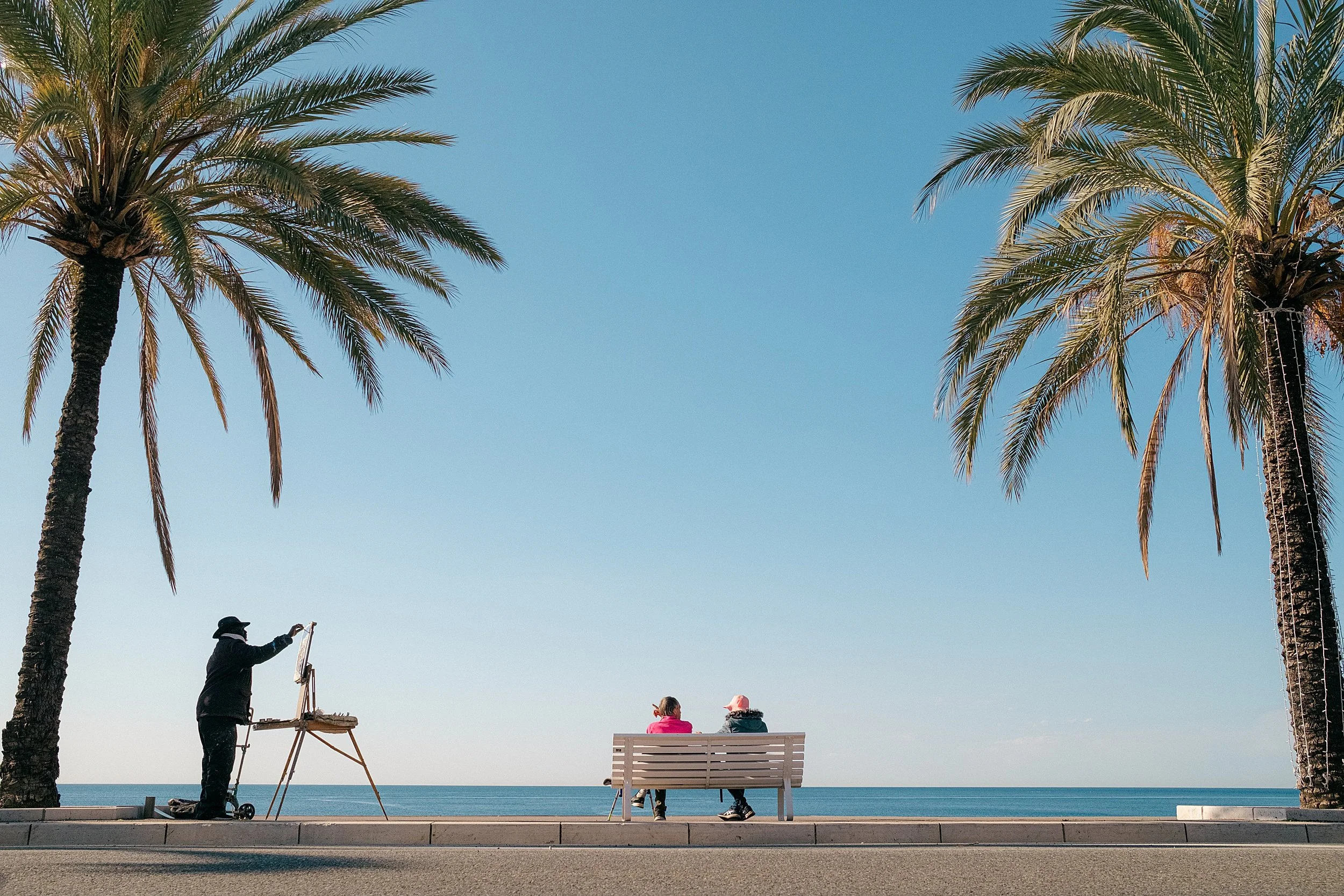
It offers layers:
Riviera glamour on the promenade
Dense human theater in Old Town
Everyday local life in Libération
Port scenes around Port Lympia
Belle Époque elegance around Jean Médecin and beyond
And the light, especially morning and late afternoon, can be extraordinary.
Nice isn’t only scenic. It’s cinematic.
Is Nice Worth Visiting?
Absolutely.
But I’d go further.
Nice isn’t just worth visiting, it may be the best base for exploring the South of France without a car.
Maybe because we didn’t over-program it. Maybe because the city worked as both backdrop and participant. Maybe because the routine of markets, trams, grocery stops, neighborhood wandering, and spontaneous photography made travel feel less like consumption and more like living.
Would I return?
Absolutely.
And I’d do much the same again: stay near Jean Jaurès, use the city as a base, keep Monday for the brocante, never skip Libération, and leave plenty of room for the unscripted hours between destinations.
Because in Nice, those often become the best part.